

Two plastic chemicals may be linked to nearly 2 million preterm births in a single year. Here are 21 steps pregnant women can take to lower their exposure. Link in the post.
Every year, across 200 countries, researchers estimate that nearly 2 million babies are born too early because their mothers were exposed to chemicals found in food packaging, personal care products, and plastic household items. These are not hypothetical future risks. They are happening now.
A study published in eClinicalMedicine analyzed global data from 2018 and estimated that DEHP, a plasticizer used to make plastic flexible, was associated with 1.97 million preterm births and 74,000 newborn deaths. A closely related chemical, DiNP, which manufacturers have been substituting for DEHP in recent years, showed a comparable burden: roughly 1.88 million preterm births. The researchers also estimated over 1.2 million years lived with disability from DEHP-linked prematurity alone. (1)
The word “Plastic” is misleading
When most people hear “reduce your plastic exposure,” they picture water bottles and grocery bags. That is not where the real danger is. Phthalates hide in your shampoo, your nail polish, your scented candle, the cling wrap on your deli cheese, and the fragrance listed on the back of your lotion. The word “plastic” makes this sound like a packaging problem. It is a chemistry problem, and it is inside products you use every day without a second thought.
The numbers are so large they can feel abstract.
They should not.
In the United States, about 1 in 10 infants was born preterm. Preterm babies face elevated risks of cerebral palsy, breathing problems, developmental delays, vision loss, and hearing problems. What the 2026 NYU Langone study makes clear is that chemical exposure in everyday products is contributing to that burden in ways that are measurable, global, and preventable.
The good news matters here.
Phthalates have a short half-life.
They leave the body within days of reduced exposure.
That means the actions you take before and during pregnancy and the advice you give to patients can make a real difference.
Here is the evidence and what it means, organized by when in your pregnancy journey each step applies most.
What the Research Shows
Phthalates work by disrupting the endocrine system, the body’s hormone production and signaling network. Exposure during pregnancy has been linked to placental dysfunction, uterine inflammation, and ruptured membranes, each of which can trigger preterm labor. The Lancet Planetary Health published a separate US-based analysis using data from nearly 5,000 mother-child pairs in the NIH ECHO program, finding that DEHP, DiNP, and related compounds were associated with reductions in gestational age and increased preterm birth risk. (2)
Research from the EAGeR trial, which followed 1,228 women attempting pregnancy, found that preconception phthalate exposure was associated with lower fecundability, meaning a reduced ability to get pregnant, as well as markers of inflammation, oxidative stress, and disrupted reproductive hormones including lower estradiol and higher FSH. (3) The problem begins before pregnancy starts.
A 2021 intervention study in pregnant women showed that urinary phthalate metabolite levels dropped 20 to 40 percent when women followed written recommendations for dietary and lifestyle changes. (4) Behavioral intervention works. The challenge is that full elimination is not realistic: over 90 percent of the general population has measurable phthalate exposure due to the chemicals’ presence in thousands of consumer products. Reduction is the goal, not perfection.
The 21 steps below are organized by when they matter most — before conception, in the first trimester, and throughout the rest of pregnancy — and each one is grounded in published evidence, not generic wellness advice. If you are pregnant, planning to be, or caring for someone who is, this is the most actionable chemical-exposure checklist you will find anywhere.
The rest of this post is for paid subscribers.
[PAYWALL BREAK]
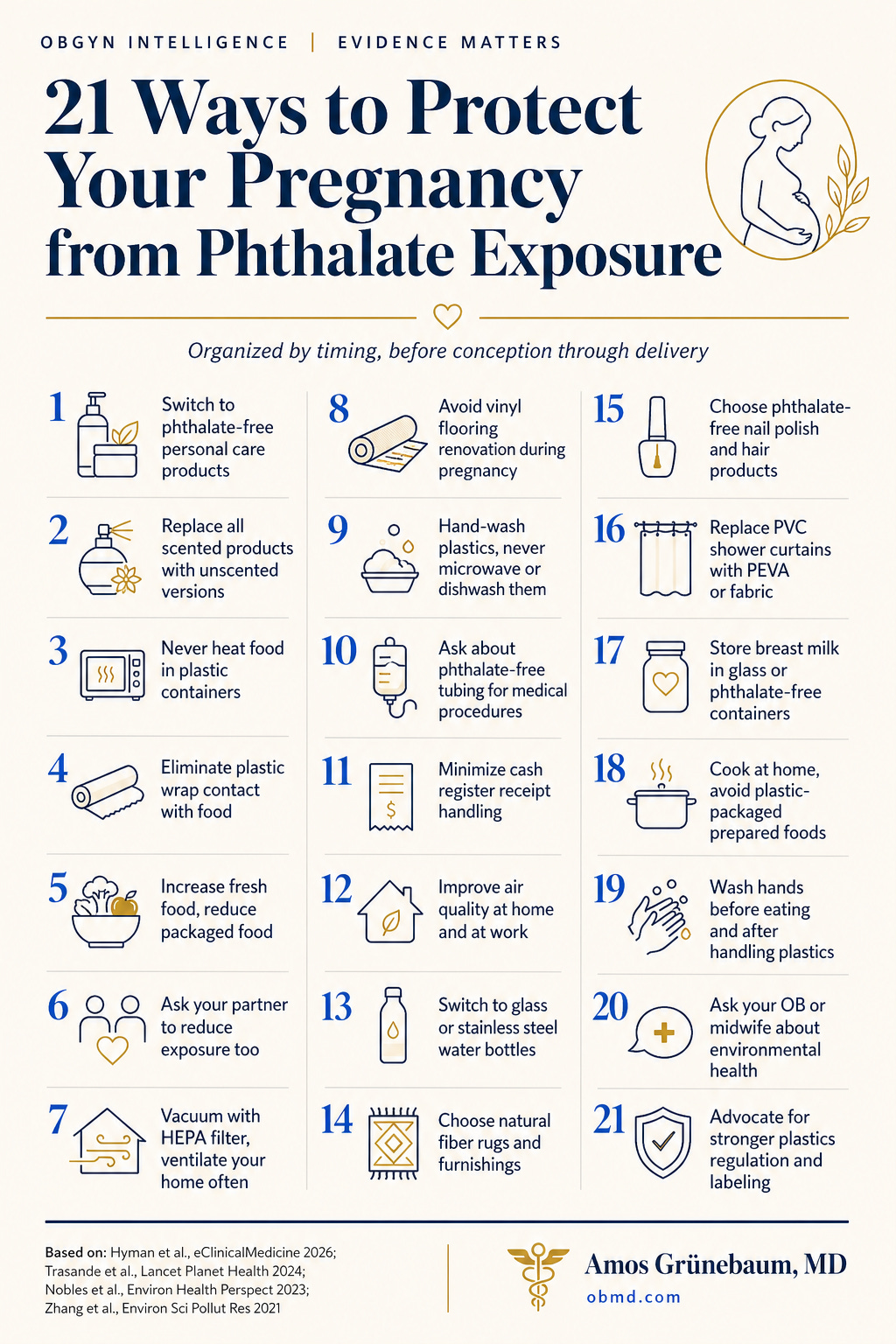
21 Ways to Protect Your Pregnancy from Phthalate Exposure
BEFORE CONCEPTION (STEPS 1 TO 7)
The preconception period, roughly three months before you try to conceive, is one of the most important windows for reducing chemical exposure. Hormonal disruption during this time can affect egg quality, uterine receptivity, and implantation.
1. Switch your personal care products to phthalate-free versions. Look for products that say phthalate-free or fragrance-free on the label. Check ingredient lists for DEP (diethyl phthalate), DBP (dibutyl phthalate), and BBzP (benzyl butyl phthalate). When a product lists only ‘fragrance’ or ‘parfum,’ phthalates may be present without being named.
2. Replace scented products with unscented versions. Fragrance is one of the most common vehicles for phthalate exposure. This includes candles, air fresheners, fabric softeners, dryer sheets, and scented cleaning products. Unscented does not mean odorless; it means no synthetic fragrance has been added.
3. Stop heating food in plastic containers. When plastic is heated, phthalates and other chemicals leach into food at higher rates. Use glass, ceramic, or stainless steel for microwave heating and hot food storage. This applies to coffee makers, food delivery containers, and takeout boxes.
4. Eliminate plastic wrap contact with food, especially fatty foods. Phthalates are fat-soluble, meaning they migrate more readily into cheese, meat, and oily foods. Use wax paper, parchment, or transfer food to glass containers.
5. Increase fresh food and reduce packaged food in your diet. A dietary intervention study showed that switching from packaged to fresh foods measurably reduced urinary phthalate levels within days. (4) This is one of the highest-impact changes you can make, because food is the primary route of phthalate ingestion.
6. Ask your partner to reduce phthalate exposure too. Research from prospective cohort studies found that paternal preconception DEHP exposure was independently associated with preterm birth, separate from maternal exposure. Both parents’ bodies matter for pregnancy outcomes. (3)
7. Vacuum and ventilate your home more frequently. Phthalates accumulate in household dust, where they are inhaled and ingested, especially by people who spend significant time indoors. Regular vacuuming with a HEPA filter and improving indoor air circulation through open windows reduces the dust burden.
FIRST TRIMESTER (STEPS 8 TO 14)
The first trimester covers embryogenesis and placentation, two of the most chemically sensitive periods of fetal development. Endocrine disruption during this window has the potential for lasting effects.
8. Avoid vinyl flooring renovation or new installation during pregnancy. Vinyl flooring is a major source of DEHP off-gassing in homes. If you are planning a renovation, do it before conception or delay until after delivery. If you live in a home with older vinyl flooring, wet mopping rather than sweeping reduces dust spread.
9. Do not machine-wash or microwave plastic containers. Heat and abrasion accelerate phthalate leaching from plastic into food and water. Hand-wash plastic items with cool water, or replace them with glass or stainless steel alternatives.
10. Read medical device labels if you undergo procedures. Medical tubing used in procedures, IVs, and blood products may contain DEHP. Two US states are working to ban DEHP in IV solution bags. If you are undergoing a procedure, you can ask your clinician whether phthalate-free tubing is available.
11. Minimize contact with cash register receipts. Thermal paper used in receipts contains high concentrations of bisphenol A and sometimes phthalates, which are absorbed through the skin. Declining printed receipts or handling them briefly and washing your hands afterward reduces dermal exposure.
12. Improve indoor air quality at home and at work. If your workplace involves significant plastic manufacturing, vinyl products, or synthetic materials, you may have higher occupational exposure. Talk to an occupational health professional. At home, increase ventilation, use exhaust fans, and keep air-filtering plants or HEPA purifiers in main living areas.
13. Choose glass or stainless steel water bottles. Plastic water bottles, even those labeled BPA-free, may contain phthalate alternatives with similar or poorly understood health effects. Switching to glass or stainless steel eliminates this exposure route entirely.
14. Use natural fiber rugs and soft furnishings where possible. Synthetic carpets and foam padding can be sources of phthalate off-gassing. If full replacement is not feasible, frequent vacuuming and ventilation are the practical alternatives.
SECOND AND THIRD TRIMESTER (STEPS 15 TO 21)
As pregnancy progresses, placental function becomes the central concern. Phthalate-related placental insufficiency is one proposed mechanism linking chemical exposure to preterm birth. Exposure reduction remains valuable throughout all three trimesters.
15. Choose phthalate-free nail polishes and hair products. Many nail polishes contain DBP as a plasticizer; many hair gels and sprays contain DEP as a fragrance carrier. The Environmental Working Group’s Skin Deep database allows you to search specific products for chemical content. Switching is low-cost and the benefit is immediate.
16. Be cautious with new shower curtains and bath mats. Vinyl shower curtains are a documented source of phthalate off-gassing, particularly when new. Choose curtains made from PEVA (polyethylene vinyl acetate) or fabric instead of PVC, and ventilate the bathroom during and after showering.
17. Store breast milk and pumped milk in glass or BPA-free, phthalate-free containers. Many breast pump kits include components that may contain plasticizers. Check that any components that contact milk are labeled phthalate-free, or use glass collection and storage containers.
18. Cook at home more than eating from plastic-packaged prepared foods. Restaurant takeout, ready meals, and processed packaged foods are associated with higher phthalate exposure, both from food contact materials and from industrial food processing equipment made with plastic components. Home-cooked fresh food is the lowest-exposure option.
19. Wash your hands before eating and after handling plastics. Because ingestion is a primary route of phthalate exposure, hand hygiene is a practical and undervalued reduction strategy. This is especially important after handling food packaging, receipts, and plastic household products.
20. Ask your obstetrician or midwife about environmental health resources. Environmental health is often not addressed at prenatal visits. Physicians trained in this area can provide targeted counseling. Organizations such as the American College of Obstetricians and Gynecologists have begun to acknowledge the role of environmental exposures in obstetric outcomes, though clinical implementation lags behind the evidence.
21. Advocate for policy-level change alongside individual action. Research is clear that individual behavior change alone cannot solve a structural problem. Phthalates are present in tens of thousands of consumer products with inconsistent labeling, inadequate regulation, and a documented pattern of chemical substitution that replaces one hazardous compound with a poorly studied analog. Contacting your elected representatives about stronger plastics regulation and better chemical labeling is not peripheral to pregnancy protection. It is part of it.
7 More Steps for Postpartum (Steps 22-28)
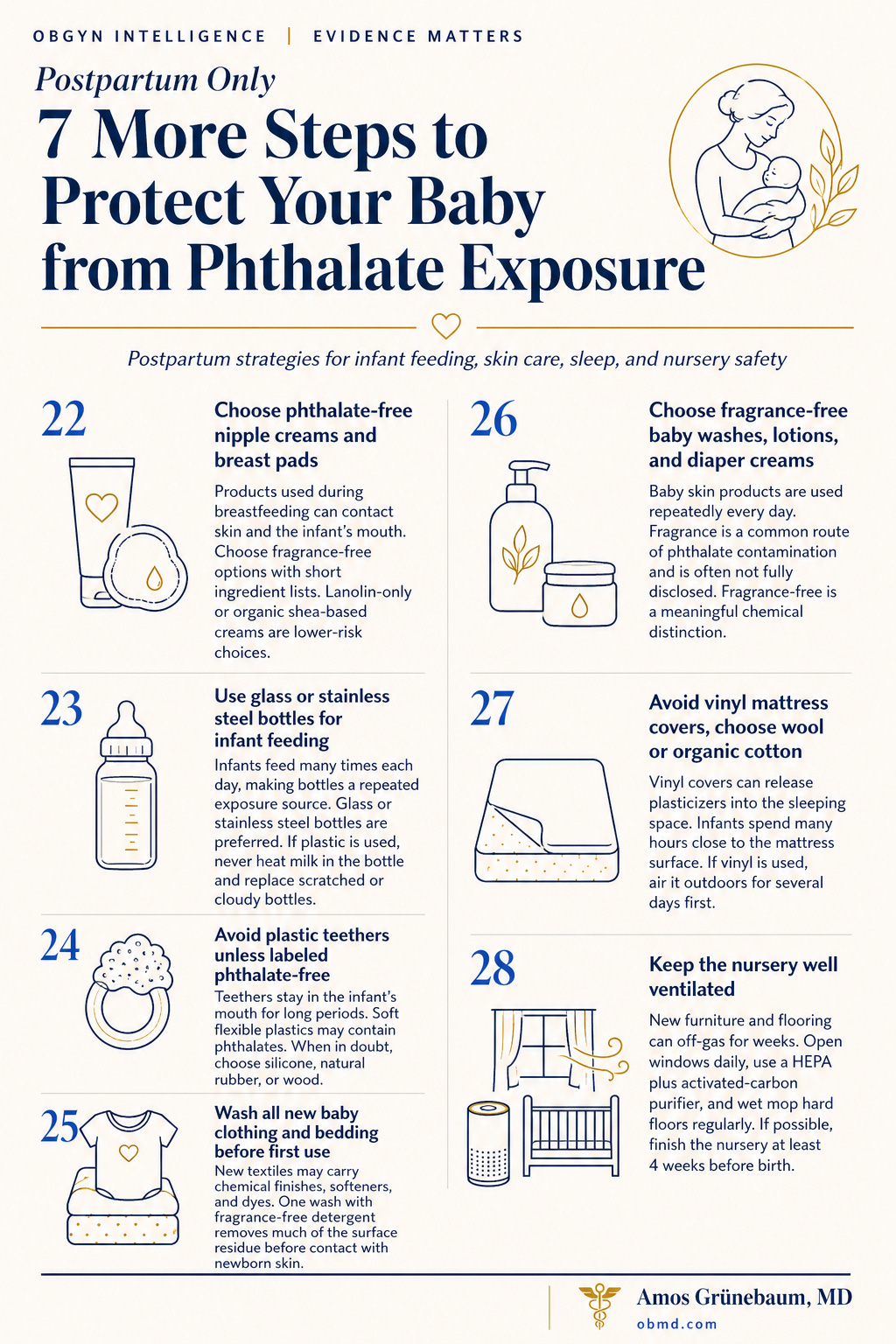
22. Choose phthalate-free nipple creams and breast pads. Nipple creams applied during breastfeeding sit directly on skin that contacts the infant’s mouth. Many conventional formulations contain fragrance or synthetic emollients that carry phthalate contamination. Look for products with short, recognizable ingredient lists and no fragrance. Lanolin-only or organic shea-based creams are the lowest-risk options currently available.
23. Use glass or stainless steel bottles for infant feeding. Plastic infant bottles, even those labeled BPA-free, may contain phthalate plasticizers or poorly studied substitutes. Because infants consume nothing but milk for months, every feeding is a potential exposure event. Glass bottles eliminate that route entirely. If plastic is unavoidable, never heat milk in the bottle and replace bottles at the first sign of scratching or cloudiness, both of which accelerate chemical leaching.
24. Avoid plastic teethers unless explicitly labeled phthalate-free. Teethers go directly into an infant’s mouth for extended periods. Soft, flexible plastic teethers are particularly likely to contain phthalates, which give plastic its pliability. The EU banned DEHP in childcare articles; US rules are narrower. Check the label, and when in doubt choose silicone, natural rubber, or wood alternatives.
25. Wash all new baby clothing and bedding before first use. New textiles are treated with chemical finishes that can include phthalate-containing softeners and dyes. A single wash with fragrance-free detergent removes a significant portion of surface chemical residue before the fabric contacts your newborn’s skin, which is thinner and more permeable than adult skin.
26. Choose fragrance-free baby washes, lotions, and diaper creams. Newborns are bathed, moisturized, and changed multiple times daily. Each product applied to their skin is a repeated low-dose exposure. Fragrance is the single most common vehicle for phthalate contamination in personal care products and is rarely disclosed in full on ingredient labels. Fragrance-free is not a marketing term; it is a meaningful chemical distinction.
27. Avoid vinyl mattress covers; choose wool or organic cotton alternatives. Vinyl mattress protectors are a significant source of DEHP off-gassing in enclosed sleeping spaces. Infants spend 16 or more hours a day in their crib, breathing air directly above the mattress surface. Wool or tightly woven organic cotton covers provide equivalent liquid protection without the phthalate burden. If you use a vinyl cover, air it outdoors for several days before placing it on the crib.
28. Keep the nursery well ventilated; new furniture and flooring off-gas phthalates for weeks. New cribs, dressers, and flooring made with composite wood, synthetic finishes, or vinyl components release phthalates and other volatile compounds into the air for weeks after installation. Open windows daily, run an air purifier with a HEPA and activated carbon filter, and if possible complete nursery setup at least four weeks before the baby arrives. Phthalates accumulate in household dust; regular wet mopping of hard floors reduces the settled load significantly.
My Take
What strikes me about this research is how clearly it illustrates a principle I return to often: the gap between individual responsibility and structural accountability. We ask pregnant women to read labels, switch products, and reduce plastic use, and those steps are real and worth taking. But we do not ask industry to disclose which products contain phthalates, or regulators to evaluate an entire class of chemicals rather than one compound at a time.
The Whac-A-Mole dynamic that Leonardo Trasande describes at NYU Langone is exactly right. We have been here before with BPA. The response from industry was to replace it with BPS and BPF, which have similar endocrine-disrupting properties. The same pattern is underway with phthalates. DiNP is being used as a replacement for restricted DEHP, and the 2026 global study suggests DiNP carries a comparable burden. We are substituting one risk for another and calling it progress.
Pregnant women deserve better than that. They deserve chemical safety built into the products they buy, not buried in ingredient lists that require a chemistry degree to decode. In the meantime, the 21 steps in this post represent what the evidence currently supports. Most are free. Many produce measurable reductions in exposure within days. None of them require perfection, because perfection is not possible when the exposures are this widespread. What is possible is reducing the burden, systematically, before conception and throughout pregnancy.
Know your numbers. Trust your body. And ask your clinician why this conversation is not already part of your prenatal care.
— Amos Grunebaum, MD
REFERENCES
1. Hyman S, et al. Global burden of preterm birth attributable to DEHP and DiNP phthalate exposure in 2018: a cross-national analysis. eClinicalMedicine. 2026. DOI: 10.1016/j.eclinm.2026.103842
2. Trasande L, et al. Prenatal phthalate exposure and adverse birth outcomes in the USA: a prospective analysis of births and estimates of attributable burden and costs. Lancet Planet Health. 2024;8(2):e84-e96. DOI: 10.1016/S2542-5196(23)00270-X
3. Nobles CJ, et al. Preconception Phthalate Exposure and Women’s Reproductive Health: Pregnancy, Pregnancy Loss, and Underlying Mechanisms. Environ Health Perspect. 2023;131(12):127004. DOI: 10.1289/EHP12287
4. Zhang Y, et al. Prenatal phthalate exposure reduction through an integrated intervention strategy. Environ Sci Pollut Res. 2021;28(38):53517-53528. DOI: 10.1007/s11356-021-14613-y
Note to editor: References 1, 3, and 4 are verified from published sources. Reference 2 DOI confirmed from Lancet Planetary Health. All citations should be cross-checked against published versions before posting.
ObGyn Intelligence | obmd.com | substack.obmd.com
Can we print off these posters ?
Thanks for the much needed education!