

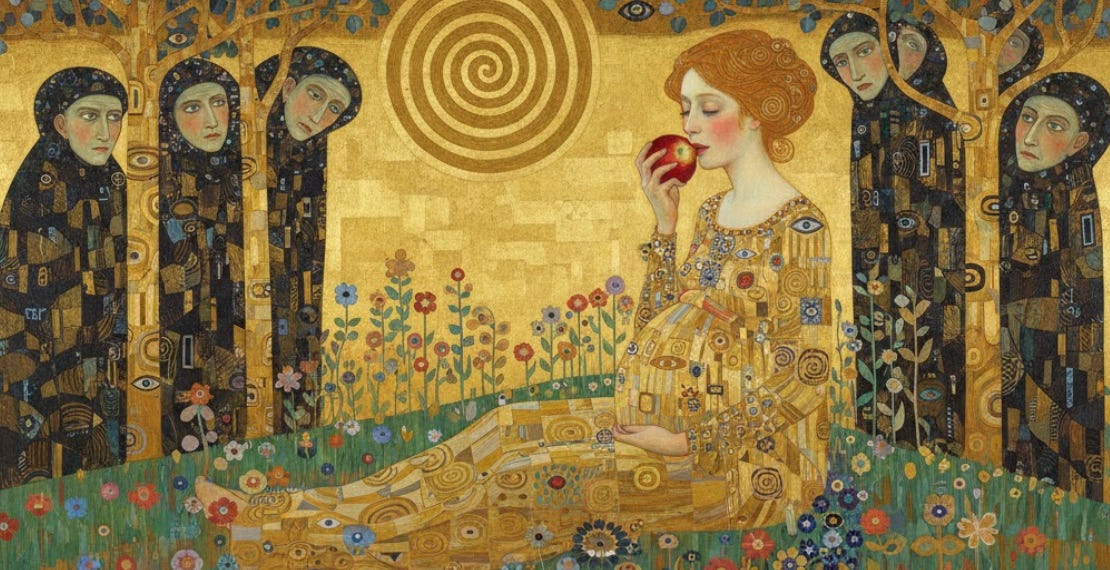
In a small village, a pregnant woman hesitates before taking food at a festival. She has been warned: if she eats in public, others may grow jealous, casting the “evil eye” on her and her unborn child. Even today, in many parts of the world, pregnant women are told to avoid eating outside the home, not because of food safety, but because of cultural fears about envy and exposure.
What looks like a simple act—lifting food to the lips—can carry layers of meaning when the eater is visibly pregnant.
Why Eating in Public Became Taboo
Food is never just fuel. It is social, symbolic, and often tied to power. In traditional societies, women were expected to be modest, restrained, and controlled. Eating publicly while visibly pregnant drew attention to the woman’s fertility and appetite, both of which could be seen as disruptive.
Two major themes underpin these taboos:
Jealousy and the Evil Eye
The “evil eye” is a widespread belief across the Mediterranean, Middle East, Africa, and South Asia. A pregnant woman eating publicly was thought to attract envy, leading to misfortune, miscarriage, or harm to the baby.
To prevent this, women ate privately, away from watchful eyes.
Control of Female Bodies
Eating in public is also about visibility. Pregnancy already makes a woman’s body more visible and, in some societies, more vulnerable to judgment.
Restricting her eating became a way to regulate her presence, limiting her mobility and autonomy.
Cross-Cultural Examples
South Asia: In rural India and Pakistan, some women are told not to eat at weddings or festivals while pregnant, for fear of drawing envy. The evil eye may be countered by protective charms, but avoidance remains common.
Middle East: Pregnant women may avoid eating dates or sweets in public, worried that others’ envy could “heat” the body and cause complications.
West Africa: In certain communities, eating in front of strangers is discouraged. A woman may be accused of greed or risk supernatural harm to the unborn child.
Europe: Historical records from Greece and Italy describe pregnant women eating quietly at home to avoid gossip or the evil eye.
The Science Behind the Belief
From a modern medical standpoint, there is no physiological reason that eating in public could harm a pregnancy. The risks are social, not biological.
But these beliefs may have served protective purposes in the past:
Food scarcity: In societies where food was limited, pregnant women eating in public might provoke resentment in others. Restricting this practice may have reduced conflict.
Privacy and hygiene: Avoiding food outside the home may have shielded women from spoiled or contaminated food.
Modern Implications
Today, these taboos can have harmful effects:
Isolation: Women may feel pressured to stay home during pregnancy, missing out on social support.
Nutrition: Avoiding meals outside the home can limit access to food, especially in urban areas where families rely on markets or workplaces for daily sustenance.
Shame and guilt: Women may internalize the idea that their appetite is dangerous or inappropriate.
What Medicine and Ethics Say
Eating is essential. Pregnant women need steady nutrition, including snacks between meals. Restricting where they eat undermines health.
Autonomy matters. A woman should be free to nourish herself without fear of judgment or supernatural harm.
Cultural sensitivity is key. Clinicians working with women from traditions that restrict eating in public should respect the belief while encouraging safe, practical alternatives.
Practical Lessons for Families and Clinicians
Encourage nourishment everywhere. Hunger doesn’t wait until a woman is home. Carrying snacks is not indulgence—it is self-care.
Address the evil eye respectfully. Acknowledge the fear, but reassure that eating outside does not endanger the pregnancy.
Support visibility. Pregnant women deserve to be seen in public spaces eating, celebrating, and participating fully in community life.
Reflection
Pregnancy taboos about eating in public reveal how food, fertility, and social order are intertwined. They speak less about the biology of pregnancy than about society’s discomfort with women’s visibility and appetites.
Today, the greater danger is not envy but isolation. To eat in public as a pregnant woman is to claim space—for herself, her baby, and her right to be part of the world.
So here is the question: when cultural practices restrict not just what a pregnant woman eats but where she eats, how should we balance respect for tradition with the need to affirm women’s presence and autonomy in public life?