

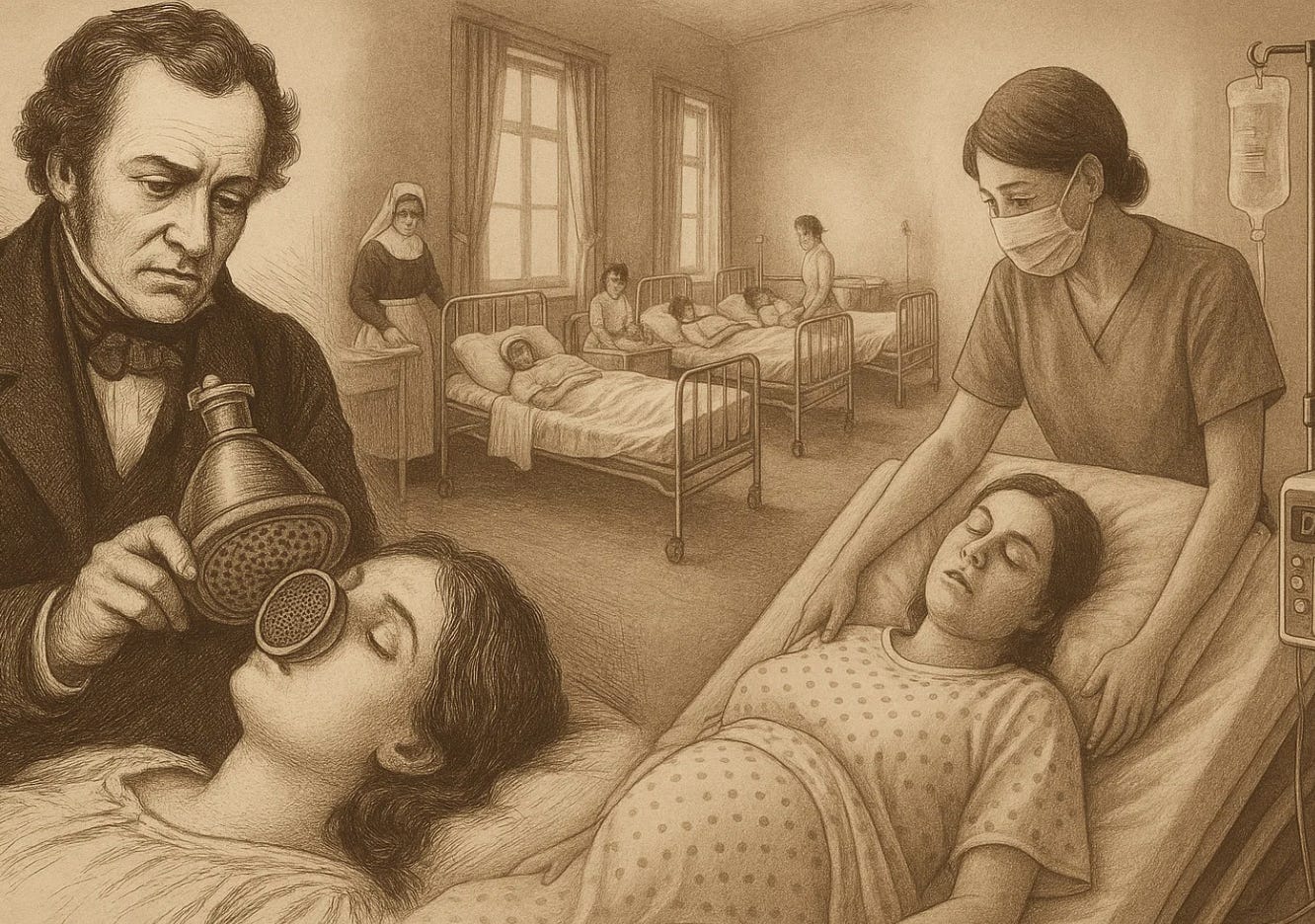
In the long arc of obstetric history, pain relief in labor has been both a scientific pursuit and a moral battleground. Each innovation—ether, chloroform, twilight sleep, epidurals—was not simply a new drug or technique, but a reflection of how society viewed women’s suffering, autonomy, and control over childbirth. The history of analgesia in obstetrics reveals less about technology than about the shifting boundaries of compassion and power.
When ether and chloroform entered obstetrics in the mid-19th century, they met resistance from both physicians and clergy who argued that labor pain was divinely ordained. Queen Victoria’s endorsement of chloroform during the birth of Prince Leopold in 1853 silenced much of the opposition and began the medicalization of obstetric pain. Yet the relief of pain came with an implicit trade: women gained comfort, but ceded part of their agency to the growing authority of hospital-based obstetrics.
By the early 20th century, the pendulum swung further with “twilight sleep”—a combination of morphine and scopolamine introduced in Freiburg, Germany, and popularized in the United States. It promised a “painless birth” through drug-induced amnesia, but the reality was darker. Women thrashed, hallucinated, and required restraints; babies were sometimes born depressed or apneic. The method persisted because it appealed to cultural ideals of female passivity and medical control. What was marketed as liberation became another form of silencing.
The postwar decades brought a counterreaction. The natural childbirth movement, led by Grantly Dick-Read and later Lamaze and Bradley, reframed labor pain as a natural, purposeful process rather than pathology. But its moral undertones—equating stoicism with virtue—risked shaming those who sought pharmacologic relief. By the 1970s, the introduction of safe regional anesthesia, particularly epidurals, finally allowed women to choose relief without sacrificing consciousness or safety. For the first time, obstetric analgesia could align with autonomy rather than undermine it.
Today, epidurals are the gold standard of obstetric pain management, used by about 70 percent of laboring women in developed countries. They offer flexibility, safety, and patient control through demand dosing. Yet the debate has evolved again. Critics question whether widespread epidural use contributes to longer labors, higher intervention rates, or a diminished sense of accomplishment. Others see it as the culmination of a centuries-long ethical correction: a woman’s right to define her own childbirth experience.
The ethical cornerstone of modern obstetrics is choice, and repect for patient autonomy—but choice must be informed.
Every woman deserves the option of proper analgesia, including regional anesthesia when medically appropriate. Informed consent also means acknowledging when that option does not exist. Women choosing home birth, for example, must understand that epidural or spinal analgesia are the safest option to relieve pain but they cannot be safely administered outside a hospital. In fact, a large percentage of transfers from home to the hospital are required if pain becomes intolerable or complications arise. Ethically, autonomy is inseparable from accurate disclosure and full consent. The right to choose a birth setting includes the right to know what is, and is not, available there. Respecting that balance is as critical as respecting the choice itself.
Artificial intelligence may soon influence this conversation. Algorithms analyzing real-time hemodynamic data and pain scores could optimize epidural dosing, predict hypotension, and tailor care to each patient’s physiology. But even with A.I. in the mix, the question remains the same: how do we balance safety, autonomy, and the lived experience of birth? Technology can quantify pain, but it cannot define meaning.
The ethical throughline from ether to epidurals is clear. Every advance has required obstetrics to reexamine its moral contract with women—to relieve suffering without erasing agency. Twilight sleep failed not because it was ineffective, but because it treated women as objects of care rather than subjects of choice. Modern epidurals, used with informed consent and shared decision-making, embody the opposite: relief chosen, not imposed.
The next frontier may blend A.I. analytics with personalized pain management, but the goal should remain the same as Queen Victoria’s quiet request more than 170 years ago: mercy without condescension. Labor pain is universal, but how we respond to it defines the humanity of our profession.