

Medicine has a communication problem.
We publish thousands of pages of clinical guidelines, systematic reviews, and consensus statements every year. We congratulate ourselves on being evidence based. Yet ask clinicians a few months later about the key recommendations, and many struggle to recall them accurately.
The problem is not intelligence.
It is how the human brain works.
We remember stories better than lists. We remember patterns better than paragraphs. Most of all, we remember images better than text.
That is why a single well-designed infographic can have greater educational impact than ten pages of carefully written prose.
See one of mine here: https://www.linkedin.com/posts/obmd_httpslnkdinghz-n6y3-share-7490666217049903104-Ul8m/?utm_source=share&utm_medium=member_desktop&rcm=ACoAAA7ytecBUkDnkjRIBeYLpS15yH5ODkVGj_U
Medical education has been built around words. Medical learning depends on visuals.
The irony is striking. Radiologists diagnose from images. Obstetricians interpret ultrasound. Pathologists examine slides. Cardiologists read echocardiograms. Every specialty depends on visual pattern recognition. Yet when we teach, we often abandon the very language the brain is best equipped to process.
A dense page of recommendations requires sustained attention, working memory, and repeated reading. A thoughtfully designed infographic immediately reveals relationships, priorities, algorithms, and exceptions. It reduces cognitive load while increasing retention.
This is not about making medicine simplistic.
It is about making complex information understandable.
An effective infographic is not decoration. It is a cognitive tool.
Unfortunately, many medical graphics fail because they try to summarize rather than teach. They are crowded with tiny fonts, unnecessary icons, decorative colors, and enough text to recreate the original paper. These are illustrations, not educational tools.
A great infographic has a different purpose. It answers one clinical question. It guides one decision. It highlights what clinicians are most likely to forget. It is remembered weeks later because it transforms information into a visual mental model.
As artificial intelligence becomes integrated into medicine, this distinction becomes even more important.
Large language models can now summarize almost any paper in seconds. Text is becoming abundant. The scarce resource is no longer information. It is attention and memory.
The future of medical education will not belong to those who produce the most content. It will belong to those who communicate most effectively.
Medical journals, professional societies, hospitals, and educators should stop treating infographics as optional marketing material. They should become an expected part of scientific communication, designed with the same rigor as the manuscript itself.
Because education is not measured by what we publish.
It is measured by what clinicians remember at the bedside.
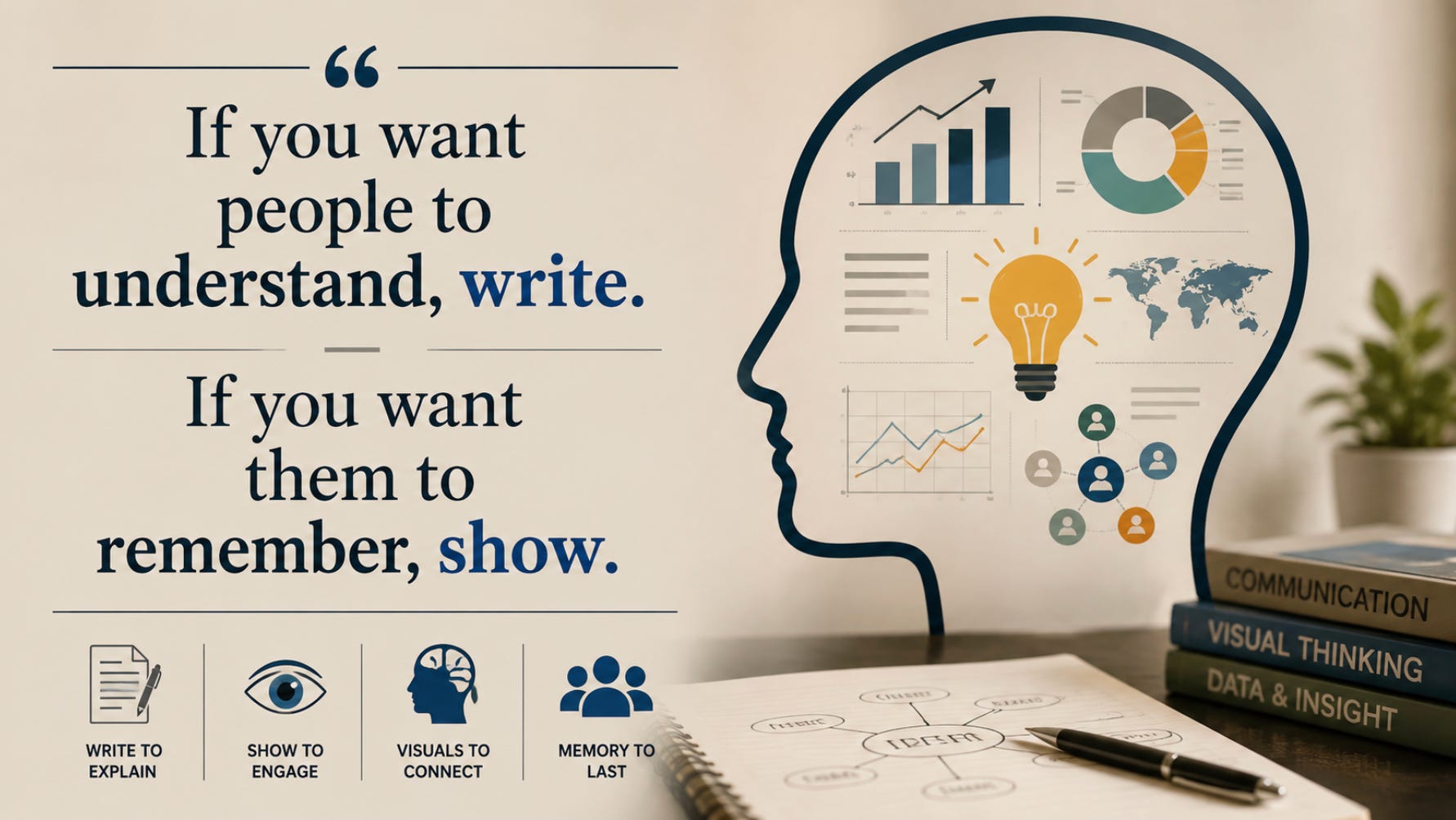
If you want people to understand, write.
If you want them to remember, show.