

Over 35% of US counties are now maternity care deserts, home to 2.3 million women of reproductive age. Obstetric unit closures have been more common in counties where the majority of the population is Black. The same payment structure that keeps faculty practices from accepting Medicaid in Manhattan is closing the only delivery hospital within 60 miles in rural Mississippi. One problem, two manifestations, the same root cause. obmd.co
m
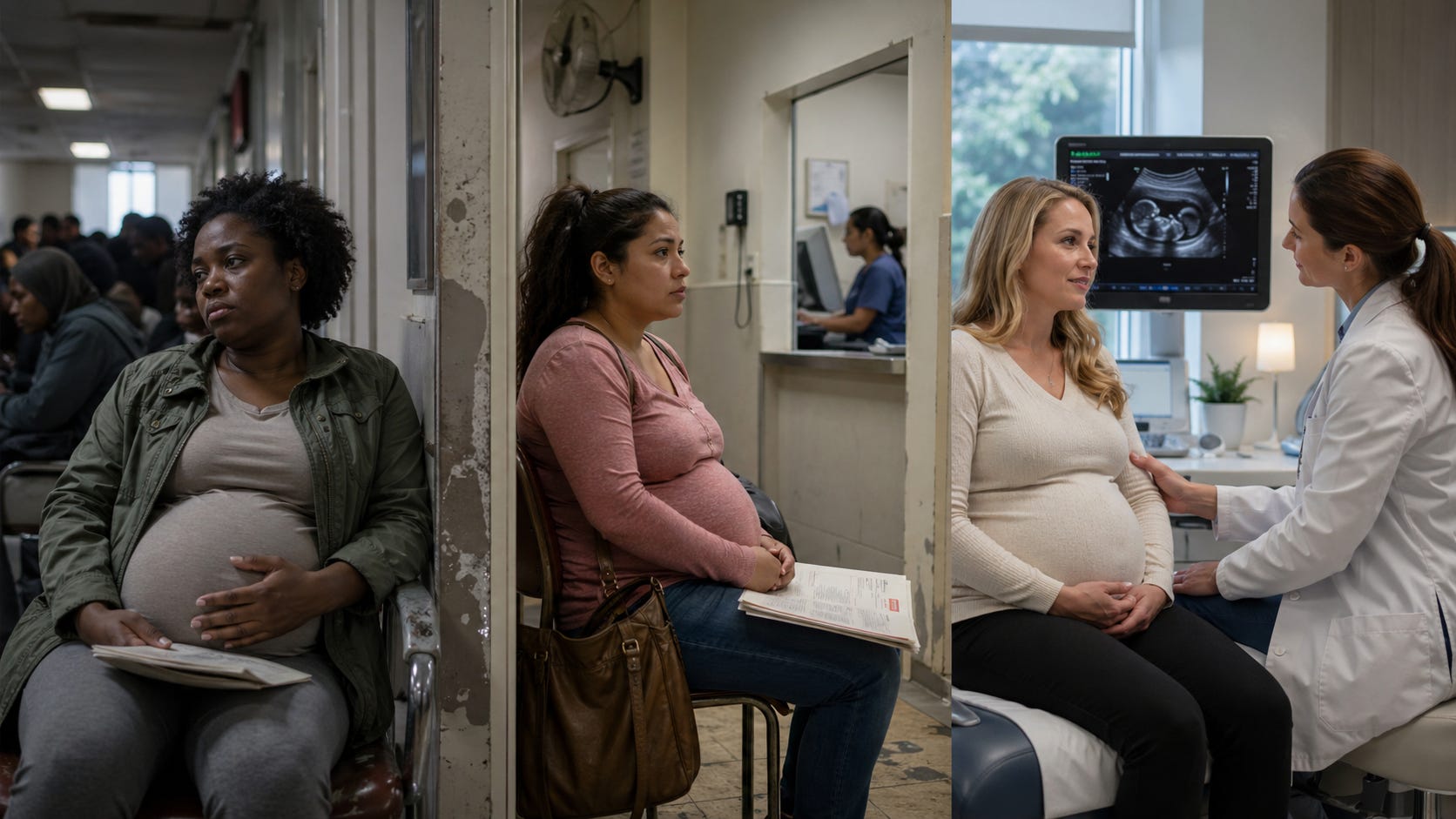
The conversation about structural inequity in prenatal care has focused predominantly on the urban two-tier system: the faculty practice that accepts Cigna but not Medicaid, the resident clinic that serves Black and Hispanic patients while the attending sees her commercial patients across the hall. This is a real and documented problem, and this series has examined it carefully.
But there is a second manifestation of the same structural failure that is, if anything, more severe in its clinical consequences. It operates not in the corridors of academic medical centers but in counties across the American South, the rural Midwest, the Mississippi Delta, and the Texas-Mexico border. It does not take the form of a two-tier system. It takes the form of no system at all.
These are the maternity care deserts: counties with no obstetric providers, no hospital with a functioning labor and delivery unit, no prenatal care within a reasonable distance. According to the March of Dimes 2024 report, more than 35 percent of American counties qualify as maternity care deserts, and they are home to more than 2.3 million women of reproductive age. In those counties, 150,000 babies were born to people who had no local access to maternity care. The trend is worsening: hospital obstetric unit closures have accelerated over the past decade, disproportionately in rural areas and disproportionately in counties where the majority of the population is Black.
The mechanism driving rural obstetric unit closure is identical to the mechanism driving faculty practice non-participation in urban centers. It is reimbursement. The same 72 percent of Medicare that makes accepting a Medicaid patient financially unattractive in a Manhattan faculty practice makes running a rural obstetric unit financially unsustainable in a county hospital whose payer mix is predominantly Medicaid and uninsured. One problem, two ZIP codes, the same cause.
The rest of this post is for paid subscribers.
