

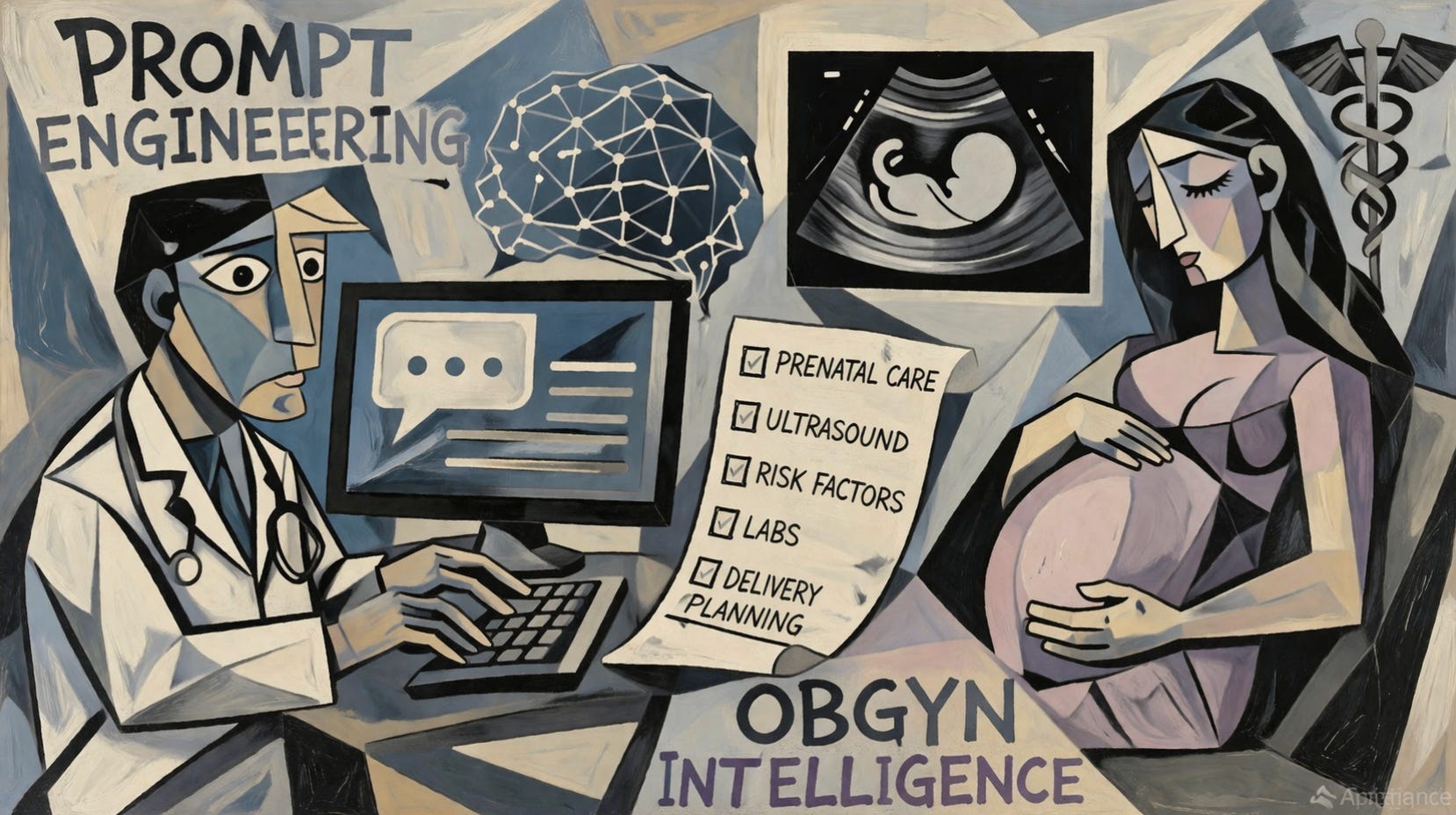
One of the most underappreciated skills in medicine is the ability to communicate the same clinical information at radically different levels, from the technical precision of a peer-reviewed manuscript to the plain accessibility of a conversation with a frightened patient. Most clinicians are competent at one or two points on that spectrum. AI, when prompted correctly, can operate across the entire range.
This course is about how to prompt AI to hit the right register for any given audience, and why getting this right matters more in women’s health than in almost any other specialty.
Why register matters so much in ObGyn and Medicine in General
Register, the level of formality and technical complexity in language, is not just a style preference in clinical communication. It is a determinant of outcomes. A patient education document written at a 12th grade level for a patient who reads at a 6th grade level does not educate. It creates anxiety, confusion, and the appearance of compliance without actual understanding.
In obstetrics and gynecology, health literacy gaps map directly onto outcome disparities. Patients who do not understand their prenatal care instructions are more likely to miss appointments. Patients who do not understand their abnormal Pap smear results are less likely to follow up for colposcopy. Patients who do not understand the warning signs of preeclampsia are more likely to delay seeking care. The communication failures are not the patient’s problem. They are the system’s problem, and writing at the right level is the system’s responsibility.
