

A patient arrives at 3am, 30 weeks, contractions every 5 minutes. The clinician on call has already managed two laboring women that night. She assesses quickly: the fetal heart tracing looks reassuring, cervical exam is 4 centimeters, the history is unremarkable. She orders continuous monitoring and plans to check back in an hour.
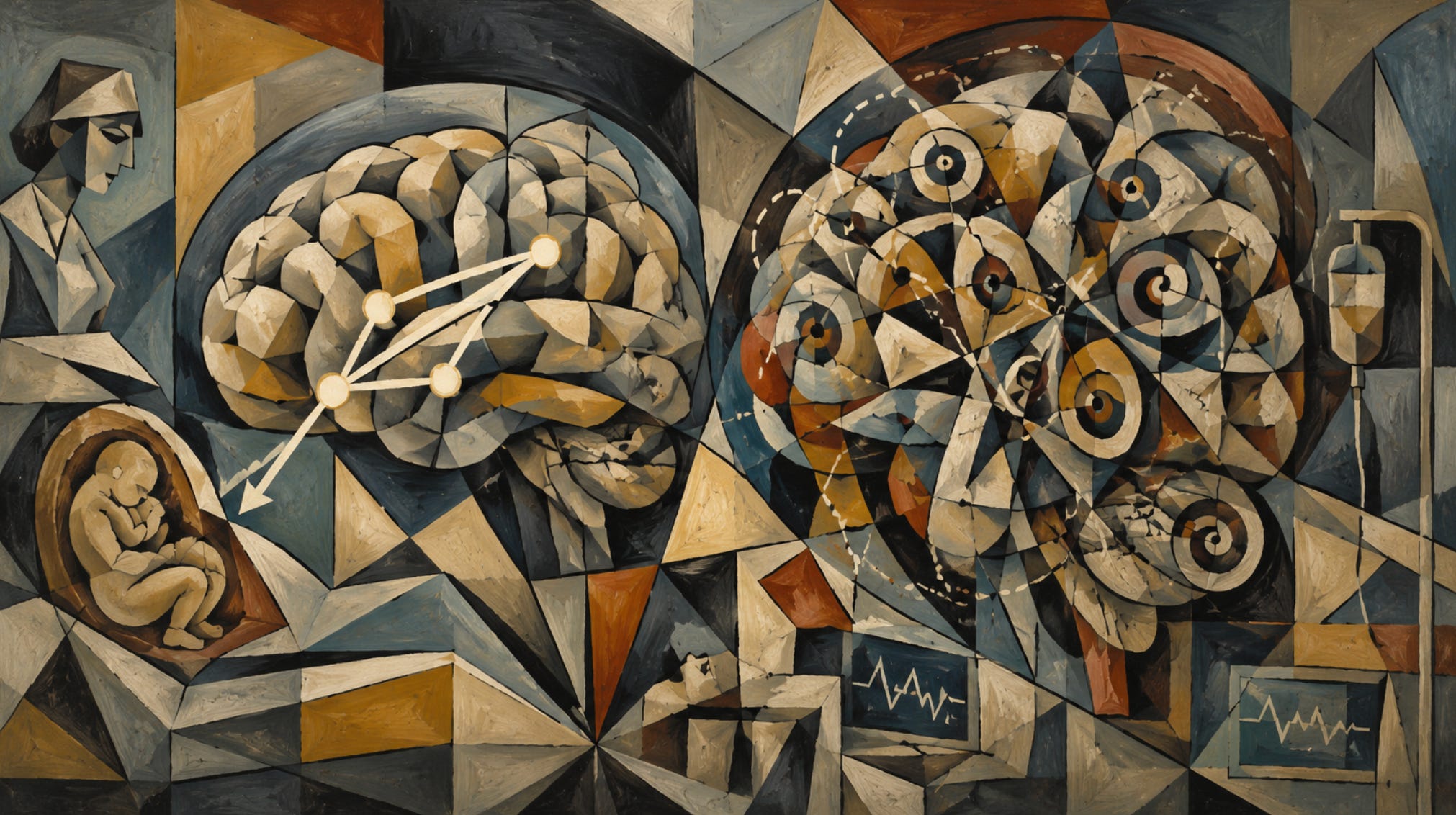
She is not being careless.
She is being human.
Two Nobel laureates spent their careers explaining exactly what happened in that room.
Herbert Simon won the Nobel Prize in Economics in 1978 for something that sounds simple but was genuinely radical: proving that human beings cannot make optimal decisions. Not because we are poorly trained, but because the cognitive task of evaluating all available information, weighting it correctly, and choosing the best option exceeds the architecture of the human brain. Simon called this bounded rationality. He coined the term satisficing — a blend of satisfy and suffice — to describe what the brain actually does: it scans a limited set of options, picks one that clears a good-enough threshold, and moves on.
In a busy labor and delivery unit, a clinician who paused over every assessment to systematically evaluate all alternatives would be clinically useless.
The satisficing brain is the feature, not the bug, that keeps the floor running. Simon understood this. He was not condemning heuristic thinking. He was mapping its limits.
Daniel Kahneman won the Nobel Prize in Economics in 2002 for a related but sharper finding: the mental shortcuts we use are not just limited — they are systematically biased in predictable ways. Anchoring: the first diagnosis encountered shapes every judgment that follows. Availability bias: we overestimate outcomes we can easily recall from recent experience. Overconfidence: after a run of good outcomes, clinicians consistently underestimate risk in the next case. These are not random errors. They are structured, replicable, and invisible to the person making them.
This is not theoretical. The Society for Maternal-Fetal Medicine acknowledged in a 2022 Special Statement that clinical decision-making in obstetrics is routinely affected by cognitive biases that can lead to medical errors.(1)
The rest of this post is for paid subscribers.
