

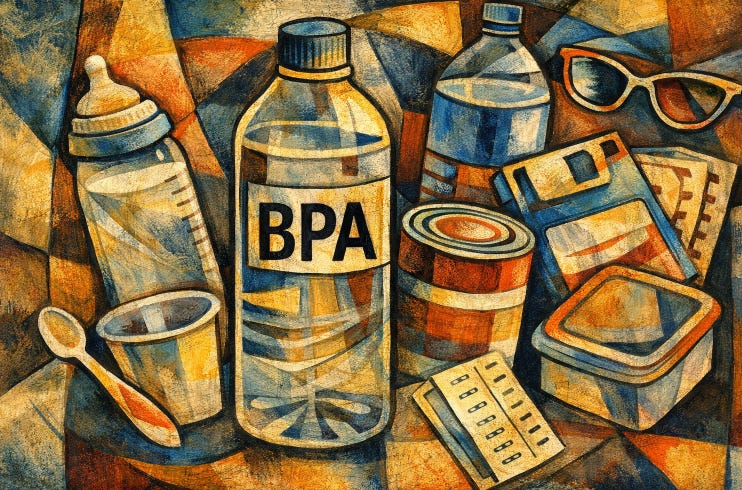
You have probably heard of BPA (BisPhenolA).
Maybe you noticed the ‘BPA-free’ label on your water bottle and assumed the problem was solved.
It is not that simple. BPA and chemicals like it are inside your body right now. They have been there for years. And if you are trying to get pregnant, or already are, this matters more than most of what fills your prenatal appointments.
This is not about fear. It is about facts, and what you can actually do with them.
What Is BPA, and Why Should You Care?
BPA stands for bisphenol A. It is a synthetic chemical that has been used since the 1950s to make hard, clear plastics and the lining inside metal cans. For decades, it was considered harmless. Then researchers began noticing something troubling: BPA behaves like estrogen in the human body.
BPA belongs to a group called endocrine disruptors. These are chemicals that interfere with your hormonal system. They mimic, block, or alter the signals that hormones send. Your body cannot tell the difference between its own estrogen and a chemical pretending to be estrogen. That confusion has consequences.
A closely related group of chemicals called phthalates works similarly. They are used to make plastics soft and flexible, and to hold fragrance in products like shampoo, lotion, and laundry detergent. You are exposed to both BPA and phthalates constantly, through food, water, skin contact, and the air you breathe indoors.
Where Is BPA Hiding?
The honest answer is: everywhere. But some sources account for far more exposure than others. The table below shows the most common ones and how concerned you should be about each.
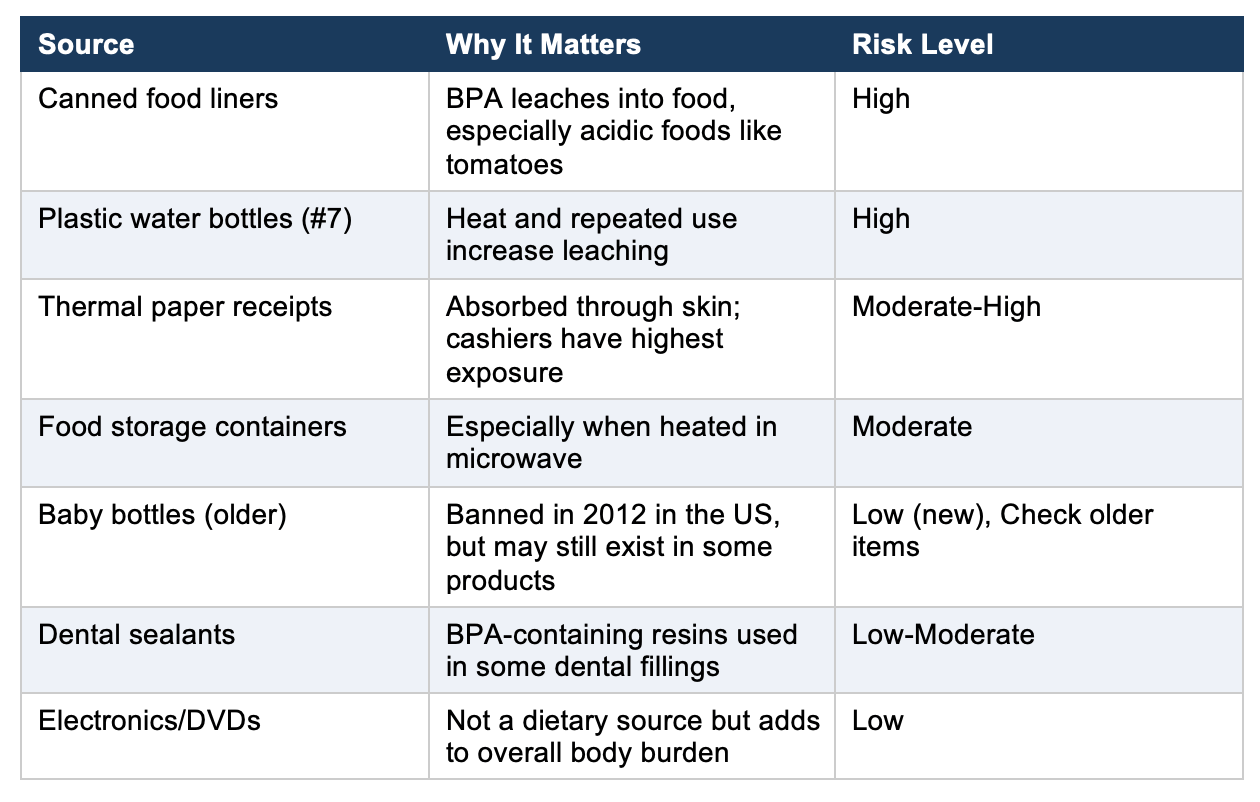
One important note: ‘BPA-free’ does not automatically mean safe. Many manufacturers replaced BPA with structurally similar chemicals like BPS and BPF. Early evidence suggests these substitutes may carry the same risks. The label is a marketing reassurance, not a clean bill of health.
How BPA Affects Fertility
BPA’s effects on reproductive health are not speculative. The research has been building for two decades, and the picture is not reassuring.
In women: BPA disrupts ovarian function. Studies have found associations between higher urinary BPA levels and lower egg quality, reduced ovarian reserve, and poorer outcomes in women undergoing IVF. A 2013 study published in Human Reproduction found that women with higher BPA levels had significantly fewer eggs retrieved and lower fertilization rates. BPA has also been linked to endometriosis and polycystic ovary syndrome, two of the leading causes of female infertility.
In men: BPA appears to reduce sperm count, motility, and morphology. Men with higher occupational exposure to BPA have been found to have three times the risk of low sperm concentration and four times the risk of low sperm motility compared to unexposed men. This is not a trivial effect.
In couples: The relationship is additive. When both partners carry high BPA levels, the cumulative impact on conception is greater than either alone. If you are struggling with unexplained infertility, BPA exposure is a real and underappreciated factor worth addressing.
How BPA Affects Pregnancy
If BPA’s effects on fertility are concerning, its effects during pregnancy are more so. The developing fetus has no defense against endocrine disruptors. It cannot metabolize or excrete them the way an adult can.
BPA crosses the placenta. It also concentrates in amniotic fluid. A fetus swimming in BPA-laden fluid, in a critical window of organ development, is exposed at a time when even tiny hormonal disturbances can have lasting effects.
The research has linked prenatal BPA exposure to a range of outcomes:
Preterm birth: Higher maternal BPA levels have been associated with increased risk of preterm delivery in multiple studies.
Altered fetal growth: Both low birth weight and disproportionate fat distribution have been observed in infants with higher in utero BPA exposure.
Neurodevelopment: Several prospective birth cohort studies have found associations between prenatal BPA exposure and behavioral problems in children, including increased anxiety, aggression, and attention difficulties. Some effects appear sex-specific, with female children showing more behavioral disruption and male children showing more hormonal effects.
Reproductive effects in the next generation: This is where it gets deeply unsettling. Phthalate exposure during pregnancy has been linked to shorter anogenital distance in male babies, a marker of reduced androgen signaling. This is a measurable anatomical change caused by a chemical that was in the mother’s shampoo.
The critical point here is timing. A large body of evidence suggests that even very low doses during sensitive developmental windows can produce permanent effects. It is not about whether you were exposed once. It is about when.
What You Can Actually Do About It
You cannot eliminate exposure completely. BPA and phthalates are in our environment in ways that go far beyond individual consumer choices. Solving this problem at a population level requires policy, regulation, and industrial change. Until that happens, the best you can do is reduce your personal exposure significantly, especially during the periods when it matters most.
The good news is that BPA clears your body relatively quickly. Urine levels drop measurably within days of cutting major sources. This means changes you make now have real and near-immediate effects on your body burden.
If You Are Trying to Conceive
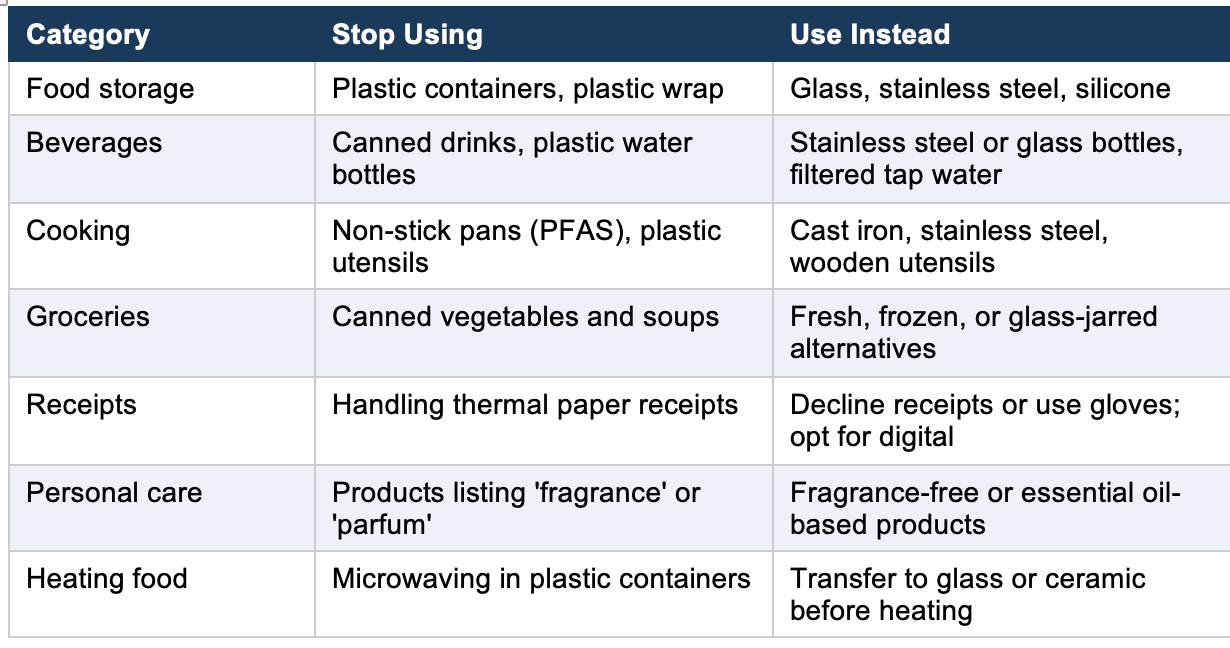
Start here. These changes take effect within days to weeks and may meaningfully improve both egg and sperm quality before conception.
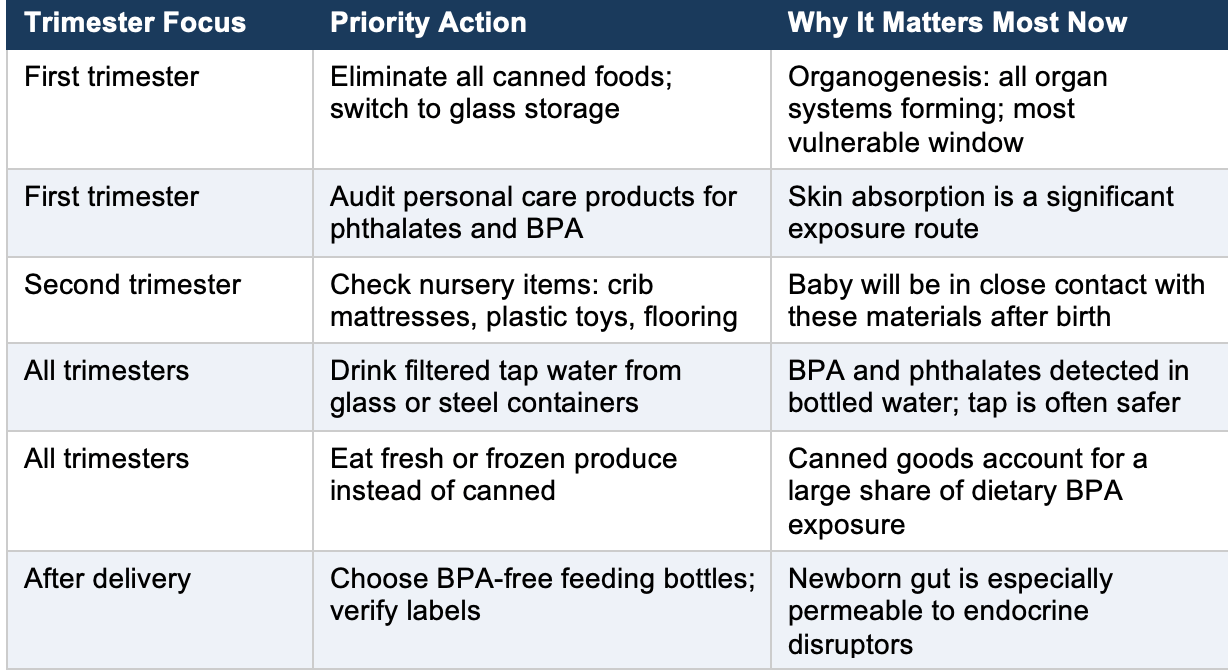
During Pregnancy
Think in terms of trimesters. The first trimester is your highest-priority window because it is when all major organ systems are being built. But consistent effort throughout pregnancy matters.
A Word About What ‘BPA-Free’ Actually Means
Walk through any baby goods store and you will see the BPA-free label on nearly everything. Bottles, pacifiers, teethers, food containers. The label is real in one narrow sense: those products do not contain bisphenol A specifically.
But the replacement chemicals, including BPS and BPF, were adopted without anything like the decades of safety testing that preceded BPA. Early data suggests they bind to estrogen receptors at comparable rates and may produce similar effects. We may have solved one problem by creating another with a different name.
The most defensible position for anyone pregnant or trying to conceive is to reduce all plastic contact with food, heat, and water, regardless of labeling. Glass, stainless steel, and ceramic are not subject to the same concerns.
The Bottom Line
BPA and phthalates are not fringe concerns. They are among the most studied environmental chemicals in reproductive medicine. The evidence linking them to reduced fertility, pregnancy complications, and long-term effects on children’s development is substantial and has been building for more than twenty years.
No, you cannot detox from plastic entirely. No, changing your water bottle will not guarantee a pregnancy. But reducing your exposure is among the most evidence-supported, low-cost, low-risk steps you can take to protect your reproductive health and your future child’s development.
The decisions you make in your kitchen, your bathroom, and your grocery store are not trivial. They are biology.
Questions? Experiences with reducing your plastic exposure during pregnancy? Share them in the comments. I read every one.