

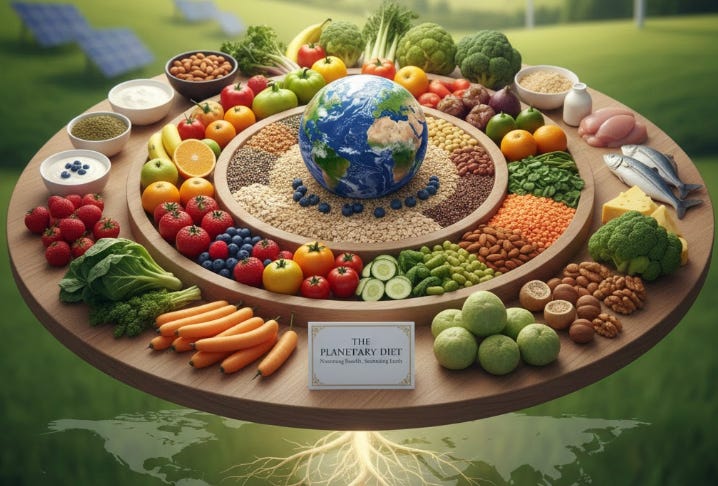
The new EAT-Lancet report says eat more plants and less red meat. The new US dietary guidelines say “eat real food.” Both are right. But pregnant women need to read the fine print.
In January 2026, US Health Secretary Robert F. Kennedy Jr. released new dietary guidelines urging Americans to ditch ultra-processed foods and eat more protein, fruits, and vegetables. Around the same time, Earth-systems scientist Johan Rockström published a commentary in Nature summarizing the 2025 EAT-Lancet Commission’s updated Planetary Health Diet. His message: what you eat affects not just your health, but the planet’s. The commission found that shifting to their recommended diet could prevent up to 15 million premature deaths per year.
Neither mentioned pregnancy specifically. And that’s a problem—because the same dietary pattern that benefits most adults may need important modifications during gestation.
The Planetary Health Diet is not a vegan diet
Let’s start with what the EAT-Lancet Commission actually recommends. The Planetary Health Diet derives about 65 percent of daily calories from vegetables, fruits, nuts, legumes, and whole grains. But it explicitly includes animal protein: roughly one portion of red meat weekly, two modest servings of poultry, two servings of fish or shellfish, moderate dairy, and eggs. About 14 percent of daily energy comes from protein.
This is a “flexitarian diet”—plant-rich, but not plant-exclusive. And that distinction matters enormously in pregnancy.
