

Preeclampsia remains one of obstetrics’ most preventable causes of maternal death, yet it still accounts for roughly one in six maternal fatalities worldwide. We have high-resolution ultrasound, continuous fetal monitoring, and advanced intensive care units, but the tool that could save the most lives fits inside a kitchen drawer. A home blood pressure monitor, paired with thoughtful A.I.-driven interpretation, might be the most underused weapon in the fight against hypertensive disorders of pregnancy.
Hospital-based technology is often reactive, not preventive. By the time a woman arrives with headache, swelling, or visual changes, endothelial dysfunction has been progressing for weeks. A.I. systems trained on longitudinal home readings could change this. They can detect subtle patterns—minute diurnal shifts, emerging variability, or trajectory changes in systolic trends—that the human eye might overlook. Just as continuous glucose monitors revolutionized diabetes care, connected blood pressure devices can now feed real-time data into algorithms designed to identify early warning signs of preeclampsia long before symptoms appear.
The clinical value of home monitoring is already supported by evidence. The WHO and NICE endorse it for high-risk pregnancies, and studies show that patients who monitor at home are diagnosed earlier and have fewer hospitalizations. In an era when hypertension-related morbidity is rising even among low-risk women, universal home BP monitoring could become the new prenatal standard, not the exception. The devices are inexpensive, reliable, and simple to use. What remains is the will—and the workflow—to integrate them into routine care.
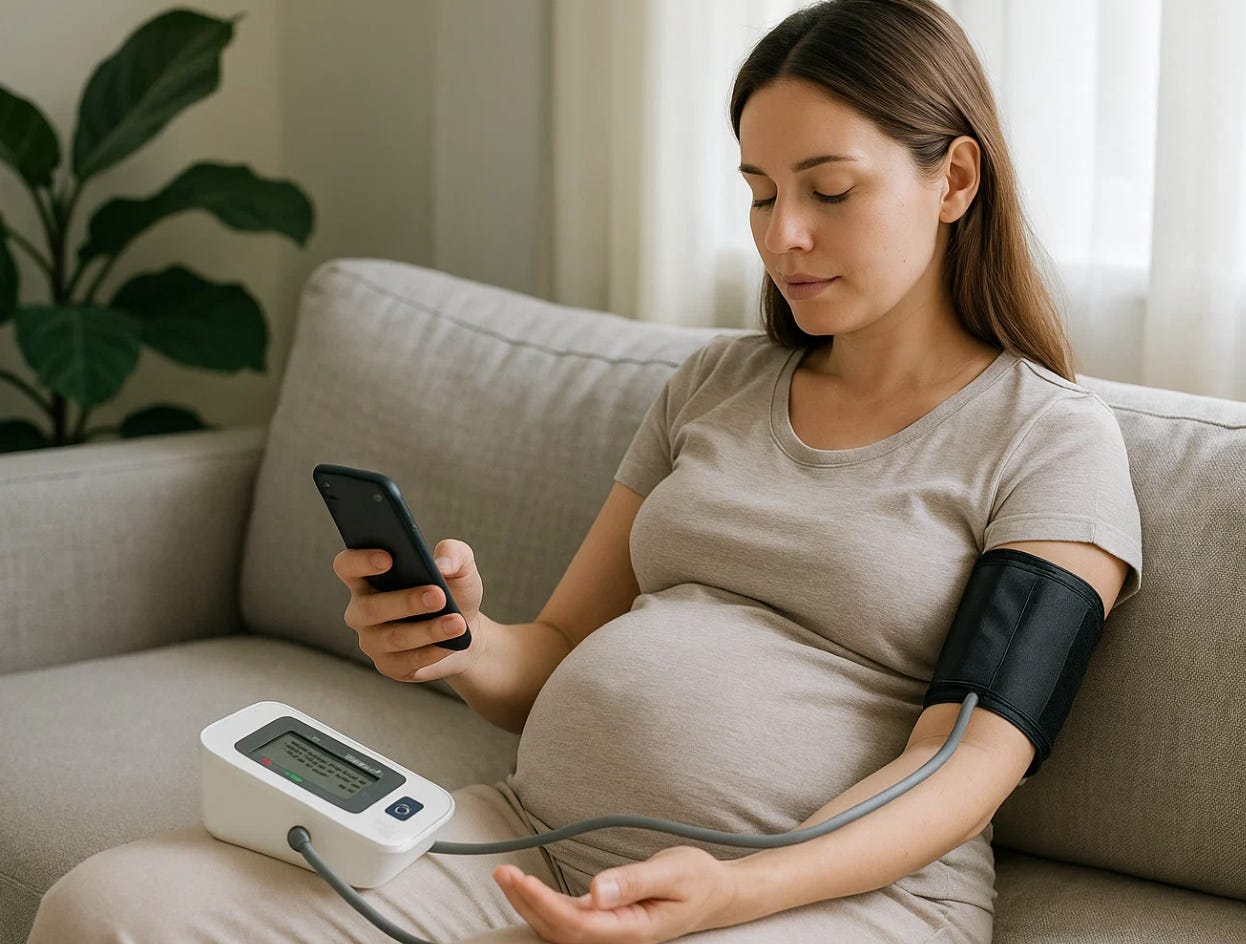
Every pregnant woman should be offered a validated, automatic upper-arm blood pressure monitor as part of prenatal care—just as thermometers and scales are standard household tools. Patients can be taught how to measure correctly: sit upright with both feet flat on the floor, rest for at least five minutes, and use the same arm each time. The cuff should be at heart level, snug but not tight, with two readings taken one minute apart. Recording results in a notebook or app allows both patient and provider to follow trends rather than isolated numbers. Consistency and calmness matter more than perfection.
Knowing when to act is crucial. If systolic pressure is 140 mmHg or higher, or diastolic 90 mmHg or higher, patients should repeat the measurement after 15 minutes of rest. If the reading remains elevated or is accompanied by headache, visual disturbances, right upper quadrant pain, shortness of breath, or sudden swelling, they should immediately contact their obstetric provider or the nearest labor and delivery unit. Readings above 160/110 mmHg warrant immediate evaluation. Patients should be told that they are not “bothering” anyone—timely reporting is preventive medicine, not overreaction. This clarity transforms anxiety into empowerment.
Artificial intelligence adds a layer of intelligence and immediacy. Predictive analytics can cluster patients into dynamic risk tiers, alert clinicians when trajectories exceed personalized thresholds, and even propose individualized aspirin or surveillance strategies. When paired with smartphone apps, these systems can automate reassurance for normal readings and triage warnings for abnormal ones, reducing unnecessary anxiety and visits while catching the dangerous outliers early. Yet, as in all of medicine, the introduction of A.I. brings ethical obligations. Algorithms are only as fair as their training data, and unequal access to connected devices risks widening disparities rather than narrowing them.
Equity is the first ethical test of this new paradigm. In the United States, Black women are three times more likely to die from preeclampsia than White women. If we advocate home monitoring, we must ensure affordable devices, bilingual instructions, and digital literacy support for all pregnant patients. The clinician’s duty expands beyond prescribing—it includes teaching, troubleshooting, and validating the data. As A.I. enters this ecosystem, transparency becomes paramount: patients must know who interprets their data, how alerts are generated, and what actions follow.
Another ethical frontier involves trust. Data without context can fuel anxiety; automation without oversight can create complacency. Clinicians must remain the interpreters of nuance—distinguishing a transient elevation from the first sign of disease, or understanding when silence from the algorithm does not mean safety. Training obstetric teams to integrate patient-generated data into decision-making will be as important as refining the algorithms themselves. A.I. should be an assistant, not an oracle.
The appeal of A.I. in preeclampsia prevention lies in its precision, but its success depends on partnership. Empowered patients are not data sources; they are collaborators in prevention. Each home BP reading represents shared responsibility—a conversation between patient vigilance and professional oversight. When that collaboration is supported by transparent technology, lives are saved, and trust deepens.
The ethical question is no longer whether patients can monitor at home. It is whether we, as clinicians, have the responsibility to ensure they do. Prevention begins not in the ICU but in the living room, with education, inclusion, and connected care. In the age of artificial intelligence, the simplest device—a home blood pressure monitor—may still save the most lives.