

Summary
A woman three weeks postpartum posted a public service announcement on Reddit to r/pregnant urging all expectant mothers to unfollow every mom influencer and curated account before their baby arrives. She described spending her pregnancy inspired by polished mommy content, only to find her newborn reality bore no resemblance to it.
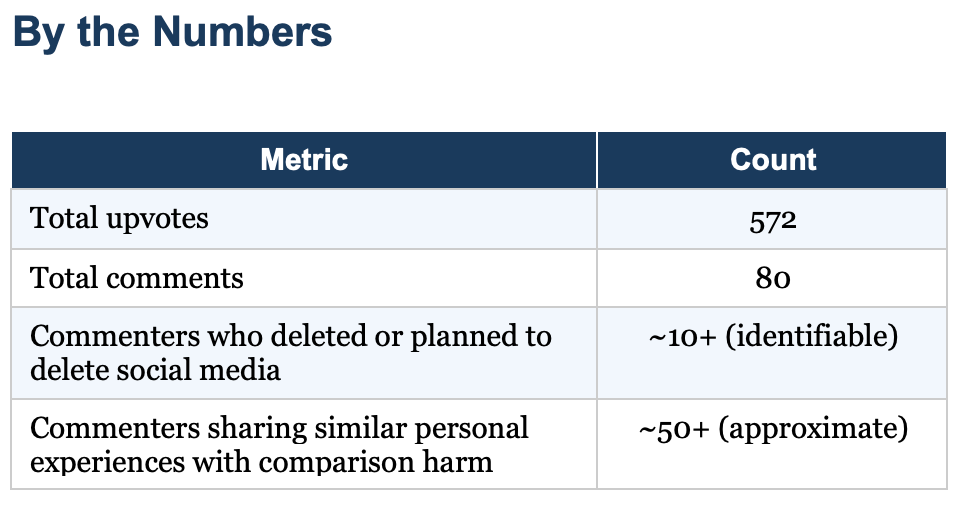
The post received 572 upvotes and 80 comments.
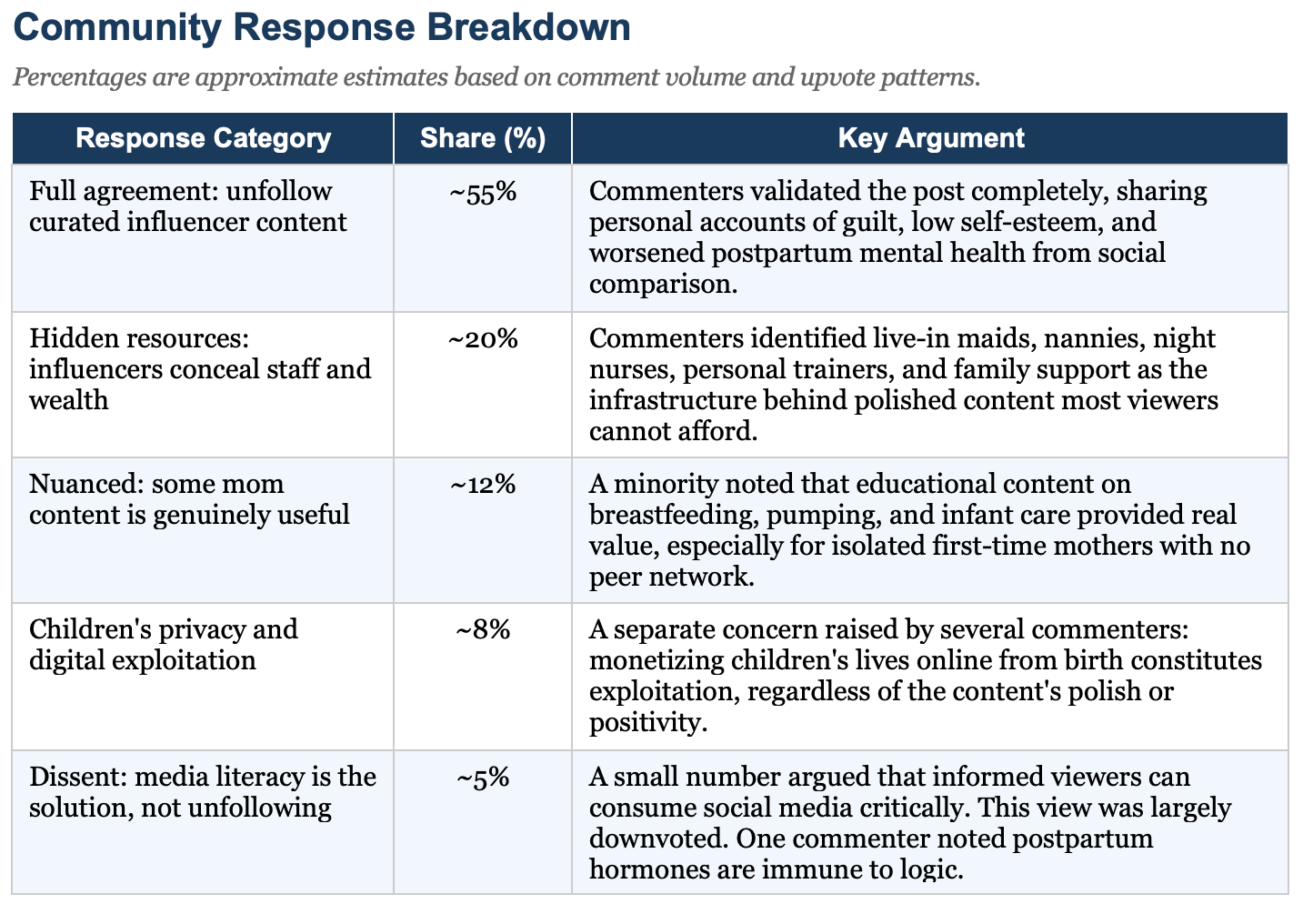
The comment section amplified her message with personal accounts of guilt, low self-esteem, and worsened postpartum mental health tied to social comparison. Multiple commenters disclosed they had deleted social media entirely in the postpartum period and reported significant improvement in their mental health. One commenter who knew a mom influencer personally detailed the full infrastructure behind the content: a live-in maid, a gardener, laundry services, a personal trainer, cosmetic procedures, and family members who did childcare full time. A small minority pushed back, arguing the problem is individual media literacy rather than the content itself.
The Clinical Issue: Postpartum Social Comparison
There is no diagnostic code for postpartum social comparison, but the harm it causes is real and clinically relevant. The postpartum period involves a sharp drop in estrogen and progesterone, disrupted sleep, physical recovery from birth, and the cognitive demands of newborn care. These factors reduce emotional resilience and amplify the impact of external stressors, including social comparison. Postpartum depression affects roughly 10 to 15 percent of new mothers; postpartum anxiety is at least as common and more underdiagnosed. Social media use in the general population is associated with increased rates of both. Curated influencer content does not present a peer experience. It presents a production, often supported by paid staff and hidden resources. A new mother comparing herself to that production is not engaging in a fair comparison. She is comparing her private reality to someone else’s edited product, at the moment she is least equipped to maintain perspective.
What It Means: The Evidence
The research on idealized motherhood content and maternal mental health has become more specific in recent years. A 2022 experimental study exposing 464 new mothers to idealized Instagram motherhood posts found that such content increased anxiety and envy compared to non-idealized posts, with mothers who had a higher tendency toward social comparison showing the greatest reduction in perceived parenting competence.
(1) A 2025 systematic review examining the impact of parenting-based social media influencers found consistent evidence that exposure to mom-influencer content was associated with reduced maternal self-efficacy, body dissatisfaction postpartum, and feelings of inadequacy and shame.
(2) A separate literature review across 16 studies found that social media functions as both a risk factor and a protective factor for postpartum depression, with harm driven specifically by social comparison, exposure to idealized motherhood content, and health misinformation, while benefit came primarily from peer support and educational content.
(3) The evidence does not establish simple causation, and no large randomized controlled trial exists on this specific question. What the literature does establish is a consistent directional signal: passive consumption of curated motherhood content in the postpartum period is associated with worse mood and lower parental confidence, and the women most biologically vulnerable to this harm are exactly those in the newborn period.
The research on social media and maternal mental health is not yet definitive, but the direction of the evidence is consistent.
Studies examining social media use in the perinatal period have found associations with higher rates of depressive symptoms, lower self-efficacy as a new parent, and increased body dissatisfaction postpartum. The mechanism is not complicated: sustained exposure to idealized depictions of motherhood raises implicit benchmarks against which women measure their own performance, and new mothers experiencing normal newborn difficulty interpret that gap as personal failure.
Several comments in this thread named specific content categories as particularly harmful: pump output videos that imply breastfeeding success is measured in ounces; “two weeks postpartum” body content that presents atypical recovery as normal; and “day in the life” videos that conceal the staff, resources, and editing required to produce them. These are not edge cases. They are dominant content formats in the mom influencer space.
The thread also surfaced a partner exposure problem. At least two commenters described partners citing TikTok content as a benchmark for what the pregnant or postpartum woman should be doing: renovating nurseries at 38 weeks, exercising throughout pregnancy, recovering quickly after birth. This extends the harm beyond the individual viewer. Clinicians routinely discuss prenatal nutrition, sleep, and exercise with patients. A brief conversation about social media and realistic postpartum expectations costs five minutes and has no documented downside. There is more evidence for that conversation than for several items currently standard in prenatal care.