

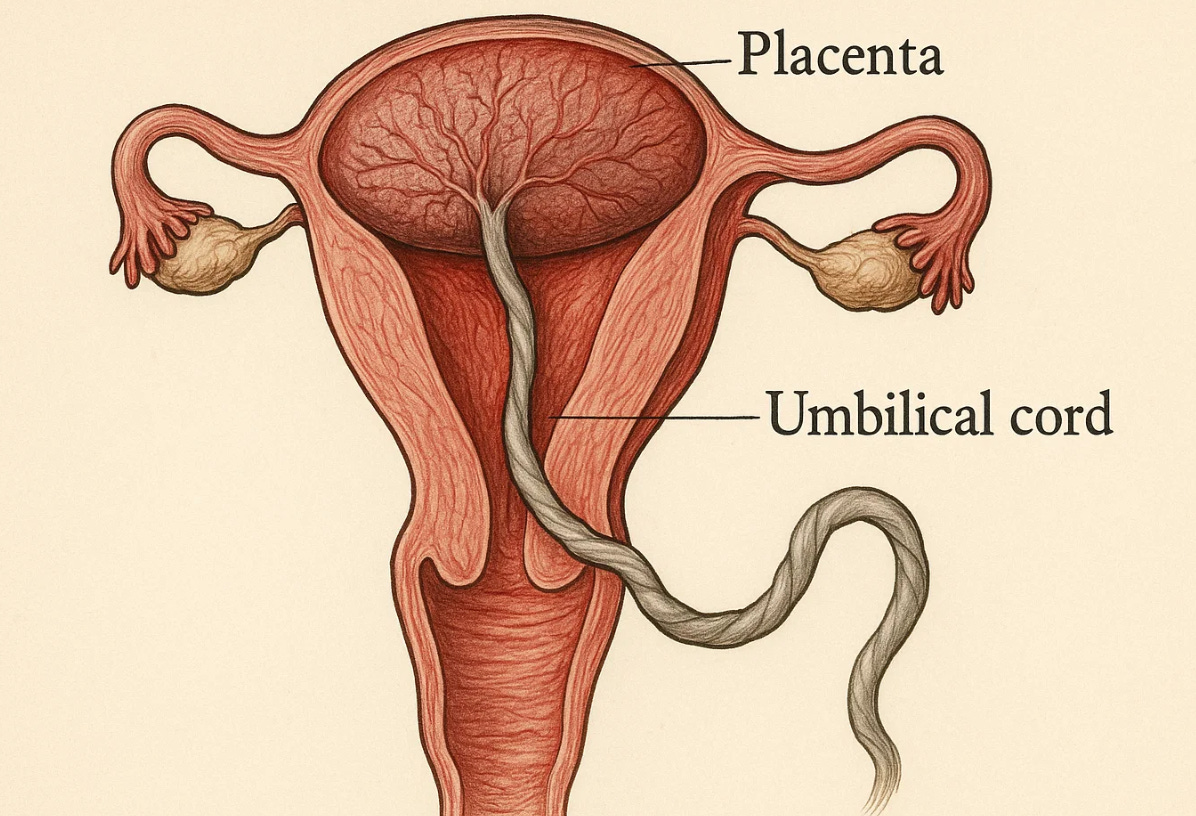
Several years ago, I stood in the operating room preparing for what should have been a routine repeat cesarean delivery. The patient was familiar to me. Years earlier, I had delivered her first baby by cesarean after more than 24 hours of labor without progress beyond five centimeters.
This second time, everything began as expected. We opened the skin, the abdomen, then the uterus. The baby was delivered without difficulty. We clamped and cut the cord. Then, as I always do, I waited for the placenta to detach and deliver on its own.
But nothing happened.
Two minutes passed. Then three. Still no bleeding, no movement. I reached into the uterus and felt the placenta firmly stuck. At five to six minutes after delivery, I knew the diagnosis: placenta accreta. I explained to the patient and her husband that the placenta could not come out safely, and the only way to save her life was to remove the uterus. They agreed.
The hysterectomy went smoothly. Later, in pathology, the uterus was opened and the placenta was found entirely embedded in the muscle. The final diagnosis was placenta increta.
The Velcro Analogy
Think of the placenta like velcro. In a normal pregnancy, the placenta attaches to the uterus like a strip of velcro pressed lightly against fabric. After delivery, a gentle tug and it peels away. That’s what normally happens.
In placenta accreta spectrum, the velcro isn’t just lightly attached. Imagine that instead of velcro, someone used superglue. The placenta doesn’t just cling to the surface; it invades into the fabric itself.
Accreta: Velcro stuck tightly, but only on the surface.
Increta: The hooks dig deep into the fabric, embedding themselves.
Percreta: The velcro rips straight through, attaching not only to the fabric but to the table underneath. In real life, this means the placenta can invade through the uterus into the bladder or other organs.
When the placenta becomes “superglued” instead of “velcro,” it will not peel away no matter how hard you pull. And pulling only causes catastrophic bleeding.
Why It Is So Dangerous
Normally, blood vessels feeding the placenta shut down as it detaches. But when the placenta is glued into the muscle, those vessels remain wide open. A single tug can open the floodgates. A woman can bleed to death in minutes.
That is why obstetricians are trained never to force a placenta. If it doesn’t come within a few minutes, suspicion must be high for accreta. Gentle exploration will usually confirm it. And once diagnosed, the safest option is usually hysterectomy, removing the uterus with the placenta still attached.
Can We See It Before Birth?
One of the most important advances in obstetrics is the ability to sometimes diagnose placenta accreta spectrum before delivery. This allows us to plan ahead—assembling a surgical team, blood bank, anesthesiologists, and even urologists if the bladder may be involved.
But here is the problem: most routine ultrasounds do not include a detailed check for accreta. Sonographers look for fetal growth, amniotic fluid, anatomy, and placental location. They do not always look for how the placenta is attached, unless there is a specific reason to suspect accreta.
What normal looks like
On ultrasound, a normal placenta has a clean, smooth border with the uterus. There is a clear separation between the placental tissue and the uterine muscle. No strange blood flow patterns are seen.
What accreta looks like
With accreta spectrum, the picture changes:
The normal “clear space” between placenta and uterus is missing.
The placental surface looks irregular, almost as if it is blending into the uterine wall.
On color Doppler, abnormal blood flow appears—vessels running straight from the placenta deep into the muscle.
In severe cases (percreta), the placenta may appear to bulge outside the uterine wall toward the bladder.
These signs are subtle. They require training and experience. Not every ultrasound machine or every examiner will pick them up. Even experts sometimes disagree.
That is why women with risk factors—multiple cesareans, placenta previa, advanced maternal age—should be evaluated specifically for accreta by specialists who know what to look for.
The Human Cost
From the surgical perspective, the path is clear. From the human perspective, it is devastating.
The woman in my vignette was still young. Losing her uterus meant she would never carry another child. For her, the hysterectomy was lifesaving. But it also closed the door to future pregnancies. She faced both relief and grief in the same moment.
This dual reality is one of the hardest aspects of obstetrics. Sometimes survival requires sacrifice.
Lessons for Clinicians
Never pull. If the placenta doesn’t come, stop and reassess.
Think accreta. Especially in women with prior cesareans and placenta previa.
Prepare for hysterectomy. In suspected cases, the surgical team, blood bank, and anesthesiologists must all be ready.
Deliver in the right place. Women with suspected accreta spectrum should deliver in centers with high-level resources—experienced surgeons, massive transfusion protocols, and intensive care.
Use ultrasound wisely. Every placenta should be assessed, and high-risk women need targeted, expert evaluation.
The Ethical Dimension
Cesarean sections save lives. But they also create scars, and scars create risk. Informed consent for cesarean delivery should not just be about today’s surgery. It should also mention the risks in future pregnancies, including placenta accreta.
Too often, patients are told that cesareans are routine. They are, but routine does not mean risk-free. For some women, the consequences come years later, when a “routine” delivery becomes a hysterectomy to save their lives.
Doctors have a responsibility to speak plainly about these risks, explain complex systems in simple metaphors. Patients deserve to know what “velcro versus glue” might mean for their futures. In addition, informed consent should include the possibility of having to perform a hysterectomy, the removal of the uterus, in an meregnecy to save the patient’s life and prevent too much bleeding.
An informed consent prior to delivery, especially for high risk patients, may include telling a patient the following: “Most deliveries go smoothly, and the uterus is preserved. Rarely, serious complications such as heavy bleeding, placenta abnormally attached (placenta accreta), uterine rupture, or severe infection can occur. In these situations, the safest way to save a mother’s life may be to remove the uterus (hysterectomy). This would mean no future pregnancies, but it is done only when absolutely necessary to protect the mother.”
Why This Matters Now
Placenta accreta spectrum is a modern epidemic born from modern medicine itself. As cesareans have risen, so has accreta.
In the United States, about 1 in 500 deliveries now involves some form of placenta accreta spectrum. That may sound rare, but for large hospitals, it means several cases every year. And each one carries the potential for catastrophic blood loss, long surgeries, intensive care, and loss of fertility.
This is not an argument against cesareans when they are needed. It is a reminder that every surgical choice carries forward into future pregnancies.
Closing Reflection
I often think back to that operation. On the outside, the uterus looked ordinary. On the inside, the placenta was fused so deeply it could never be separated.
The velcro analogy stays with me because it captures both the simplicity and the danger. Most of the time, the placenta peels away cleanly. Sometimes, though, it acts like glue. And when it does, the only safe choice is to take the fabric away entirely.
Obstetrics demands humility. We cannot always predict when velcro will turn into glue. But we can be vigilant, cautious, and honest with our patients. That vigilance saves lives.