

This series has documented the structural mechanisms behind Black maternal mortality: the insurance hierarchy, the two-tier academic system, hospital quality stratification, the postpartum coverage cliff. The interventions being deployed instead -- bias training with no outcome evidence, doulas with no mortality data -- share one feature: they do not require any institution that benefits from the current structure to give anything up. This is the closing argument. obmd.co
m
I want to close this series by asking a question that the health equity literature almost never asks directly: who benefits from the current policy response to Black maternal mortality?
I ask this not to impute bad faith to the researchers, advocates, and policymakers who are genuinely committed to addressing the problem. Many of them are. I ask it because the systematic preference for attitude-focused interventions over structure-focused interventions, in the face of evidence that points clearly toward structural mechanisms, is too consistent to be accidental. When a pattern is this consistent, there is usually a reason. Identifying the reason is not cynicism. It is analysis.
This series has established the following points with evidence:
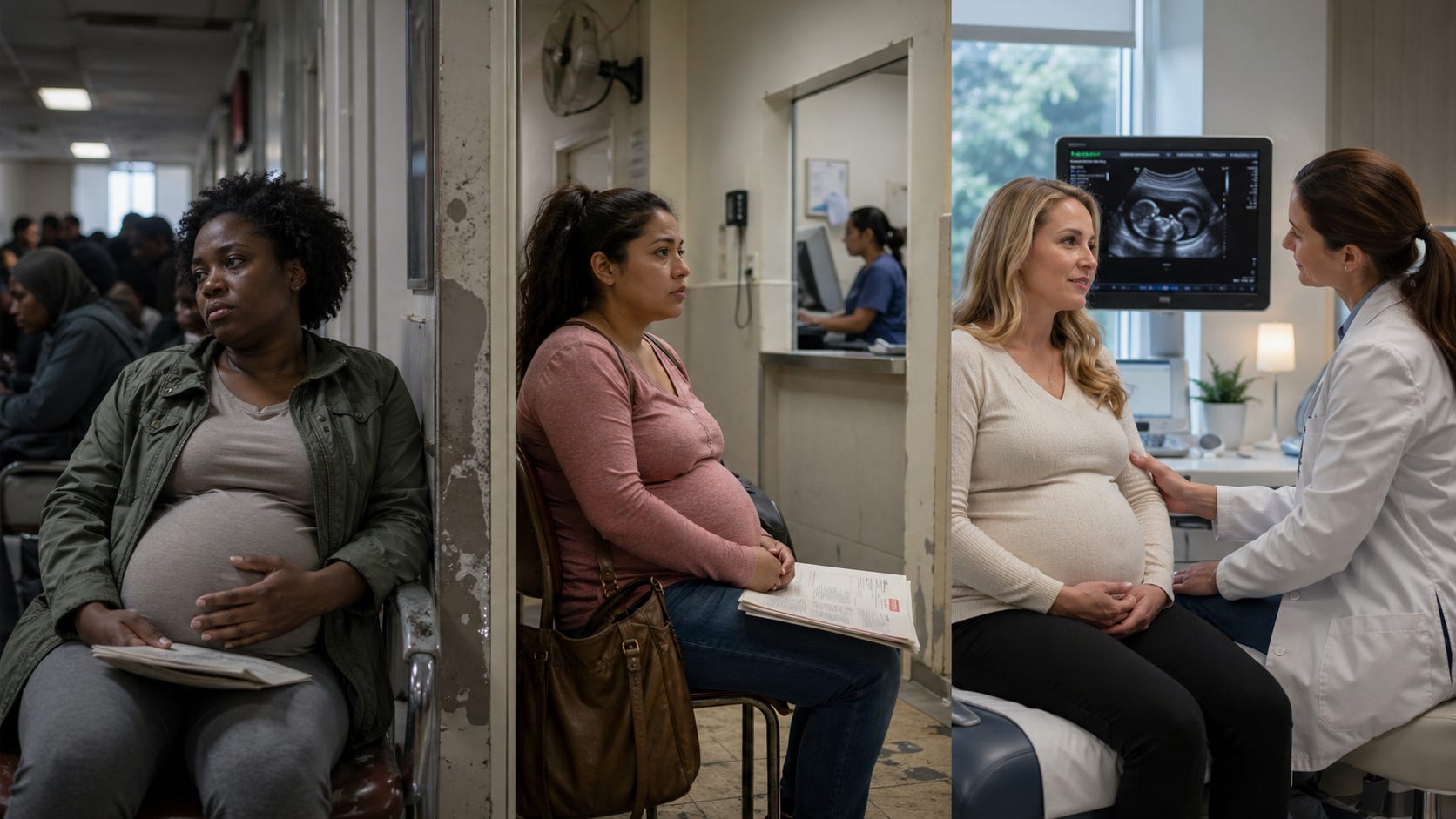
The racial maternal mortality disparity persists across income levels, indicating that poverty is not the primary mechanism. Hospital of delivery accounts for nearly half the excess burden, indicating that institutional quality is a dominant variable. The insurance hierarchy routes patients away from faculty obstetric care through a reimbursement gradient that runs from commercial insurance through marketplace and union plans to Medicaid. The two-tier structure inside academic medical centers concentrates Medicaid and minority patients in resident clinics while faculty practices serve commercial patients. Continuity of care, which is structurally absent for patients in rotating-provider clinic systems, is associated with better outcomes for Black women specifically. Maternity care deserts have been created by the same reimbursement economics that drive urban faculty practice non-participation. Implicit bias training has not been shown to change clinical behavior or patient outcomes in any study. Doula care has not been shown to reduce maternal mortality or severe morbidity. The postpartum coverage cliff, now partially addressed by the 12-month extension, was responsible for a share of postpartum deaths that is computable from the mortality timing data.
Given this evidence base, a rational policy response would prioritize: raising Medicaid obstetric reimbursement rates to at least Medicare levels; requiring faculty practices at federally funded academic centers to accept Medicaid as a condition of NIH funding eligibility; mandating AIM quality improvement bundle implementation at hospitals receiving Medicaid disproportionate share payments; preserving rural obstetric unit capacity through enhanced reimbursement for low-volume high-necessity facilities; completing the national 12-month postpartum Medicaid extension in the remaining states; and strengthening continuity-of-care models in resident clinic settings.
None of these are the primary policy response. The primary policy responses have been implicit bias training mandates and doula Medicaid billing codes. The question is why.
ObGyn Intelligence: Safety analysis, the evidence critique, and the verdict are below -- for subscribers who want the full picture.
