

It has no ICD-10 code.
It cannot be diagnosed by ultrasound.
No laboratory test detects it.
Yet it affects countless women after giving birth.
Many leave the hospital believing they have failed.
Not because their baby was harmed.
Not because they made poor decisions.
Not because their clinicians failed them.
But because their birth did not unfold the way they had imagined.
“I ended up with a cesarean.”
“I couldn’t do it without an epidural.”
“My body failed.”
“I wasn’t strong enough.”
“I didn’t get the birth I wanted.”
These are among the most heartbreaking sentences I hear.
Not because they describe bad medicine.
But because they often describe good medicine viewed through the lens of unrealistic expectations.
How did we create a culture in which a healthy mother with a healthy baby can still leave believing she failed?
That question deserves far more attention than it receives.
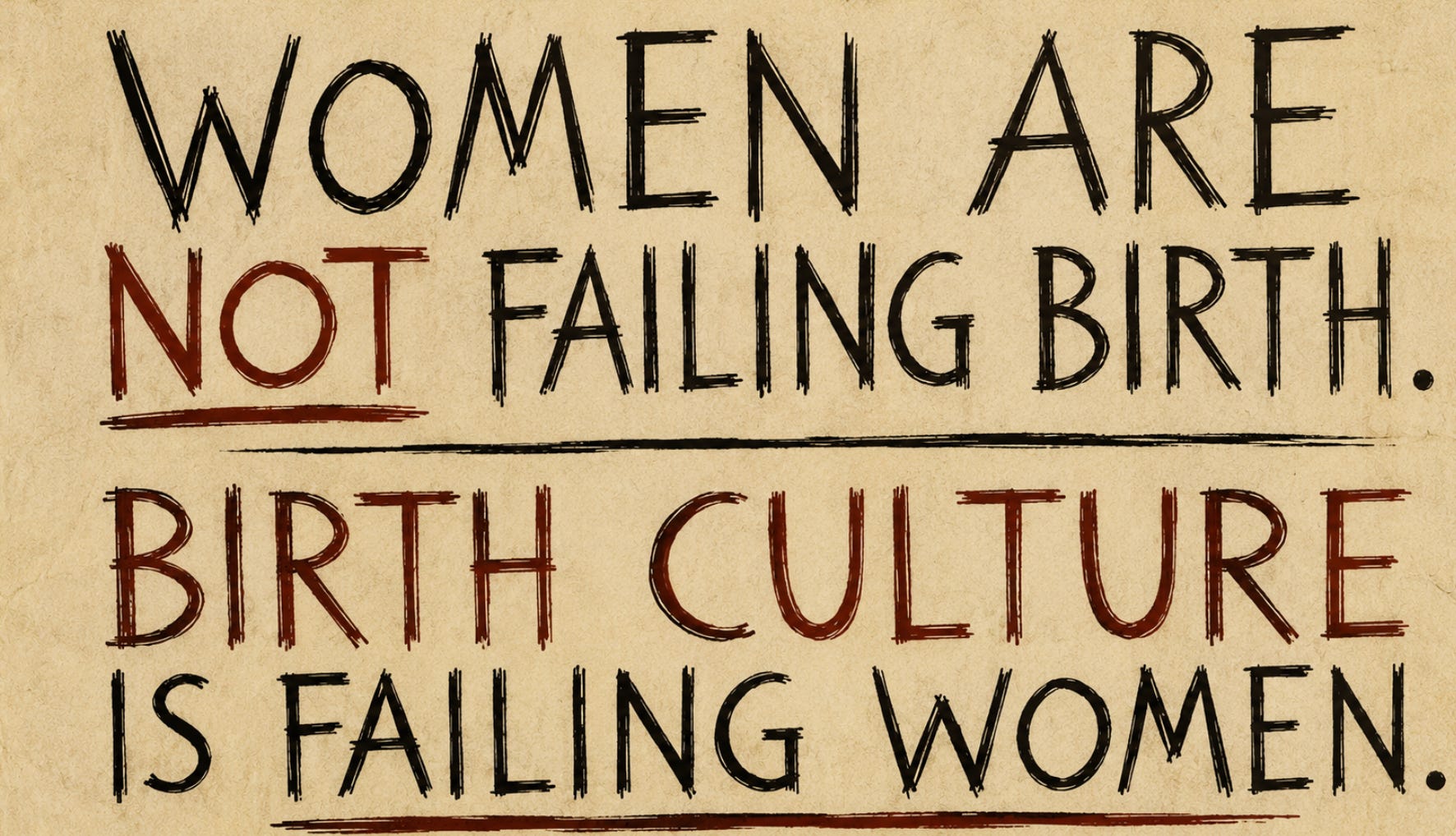
Because I do not believe women are failing birth.
I believe birth culture is failing women.
Subscribe to read the full essay
Why do so many women experience guilt after medically appropriate births? Why do epidurals, inductions, and cesarean deliveries become symbols of failure rather than evidence of individualized care? And why has childbirth increasingly become something to achieve instead of something to navigate?
In this essay, I argue that modern birth culture has unintentionally transformed childbirth into a performance with winners and losers. It is time to change that narrative.
