
Work-Up for Recurrent Pregnancy Loss
In 2026, ASRM redefined recurrent pregnancy loss to count biochemical losses and start the work-up at two, not three. Here is what every major guideline now recommends, where they agree..

For decades, a woman in the United States needed two miscarriages to earn a work-up, while a woman in the United Kingdom needed three. In 2026 the American Society for Reproductive Medicine went further. It now counts a positive pregnancy test that never became a heartbeat as a loss. Two of those, and the evaluation begins. The number that opens the door to answers just got lower, and that changes who gets investigated.

What Recurrent Pregnancy Loss Means, and Why the Number Keeps Changing
Recurrent pregnancy loss means more than one miscarriage in a person who is trying to have a baby. The hard part has always been the threshold. How many losses before a couple deserves testing instead of a shrug and the words try again? That number is not a law of nature. It is a choice, and the choice decides who gets care.
The direction across the major guidelines is clear. ASRM set the bar at two clinical losses in 2012 and kept two in its 2026 update, now counting biochemical, test-only losses and counting losses whether or not they happened back to back.1 2
ESHRE moved to two losses in 2017 and held that line in its 2022 update.3
The Society of Obstetricians and Gynaecologists of Canada set two losses before 20 weeks in 2025.5
Only the RCOG still defines recurrent miscarriage as three or more first trimester losses, though it tells clinicians to investigate after two when something looks wrong.4
The Stakes: Who Gets Through the Gate
Why the threshold matters: fewer than 5 in 100 women experience two miscarriages, and only about 1 in 100 experience three or more.2 Set the definition at three and you turn away most of the women who are frightened, grieving, and asking for help after a second loss. Set it at two and you let them in. The definition is not bookkeeping. It is a gate.
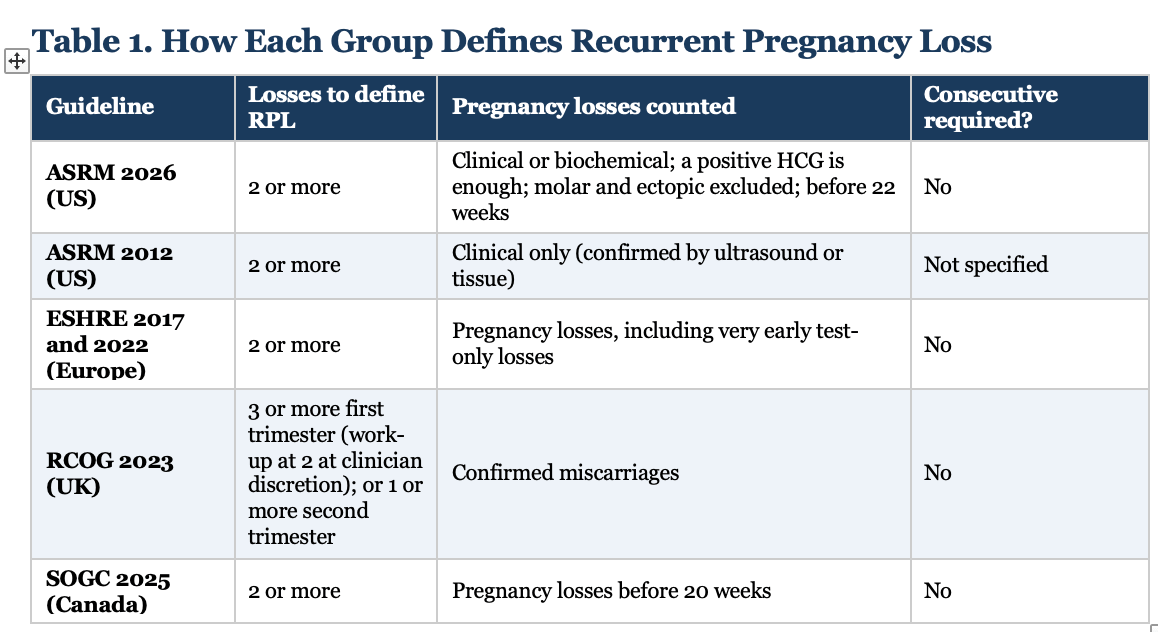
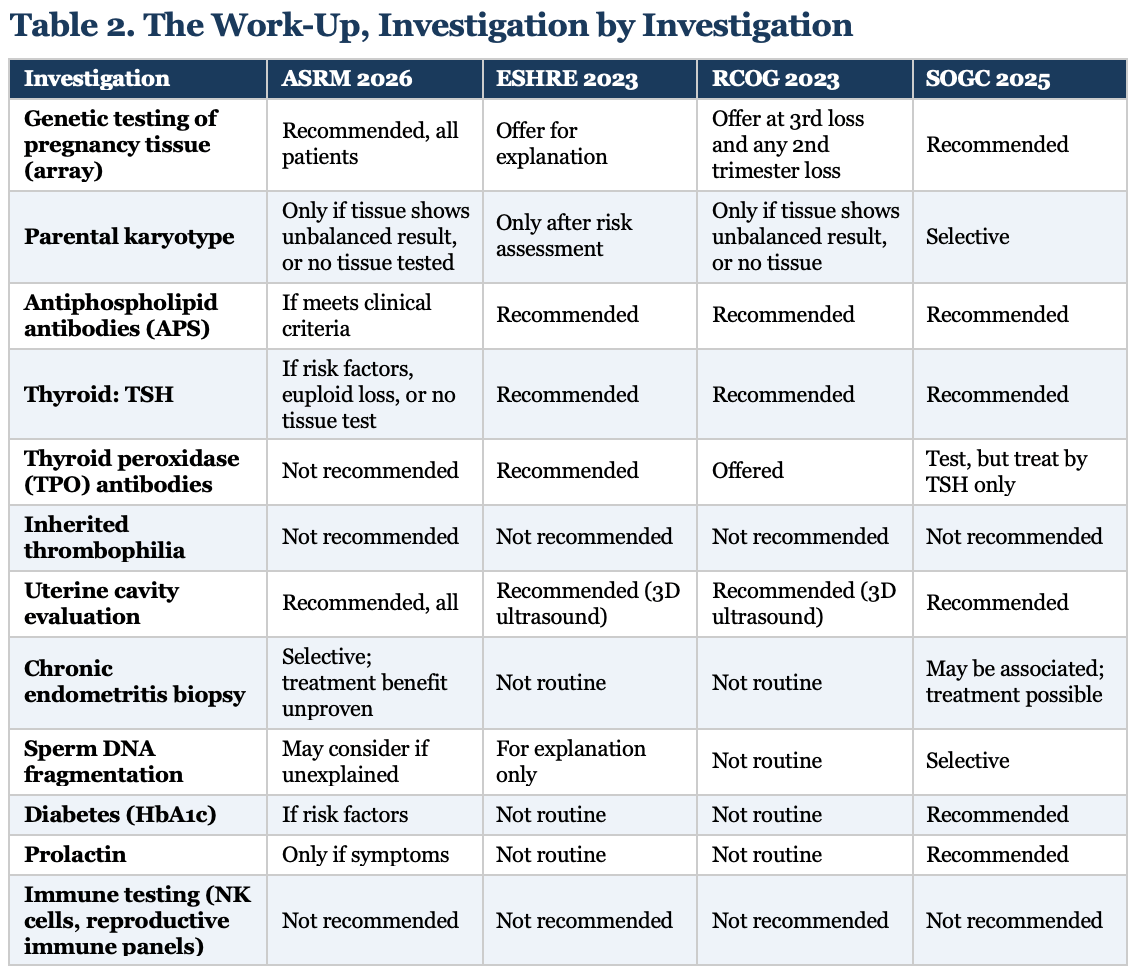
Cell entries are condensed from each guideline. Selective means reserved for specific clinical situations rather than offered to everyone.
The tables show where the world’s guidelines agree and where they split. What that means for your testing, your money, and your next pregnancy is below. Paid subscribers read on.
