

A woman comes in at 9 weeks for a routine confirmation scan. The pregnancy was planned. She has already told her mother. The sonographer finds no cardiac activity. The gestational sac measures consistent with 7 weeks. She is shown the image, given a pamphlet on miscarriage management options and recurrent pregnancy work-up, and told someone will call to discuss next steps.
She drives home alone.
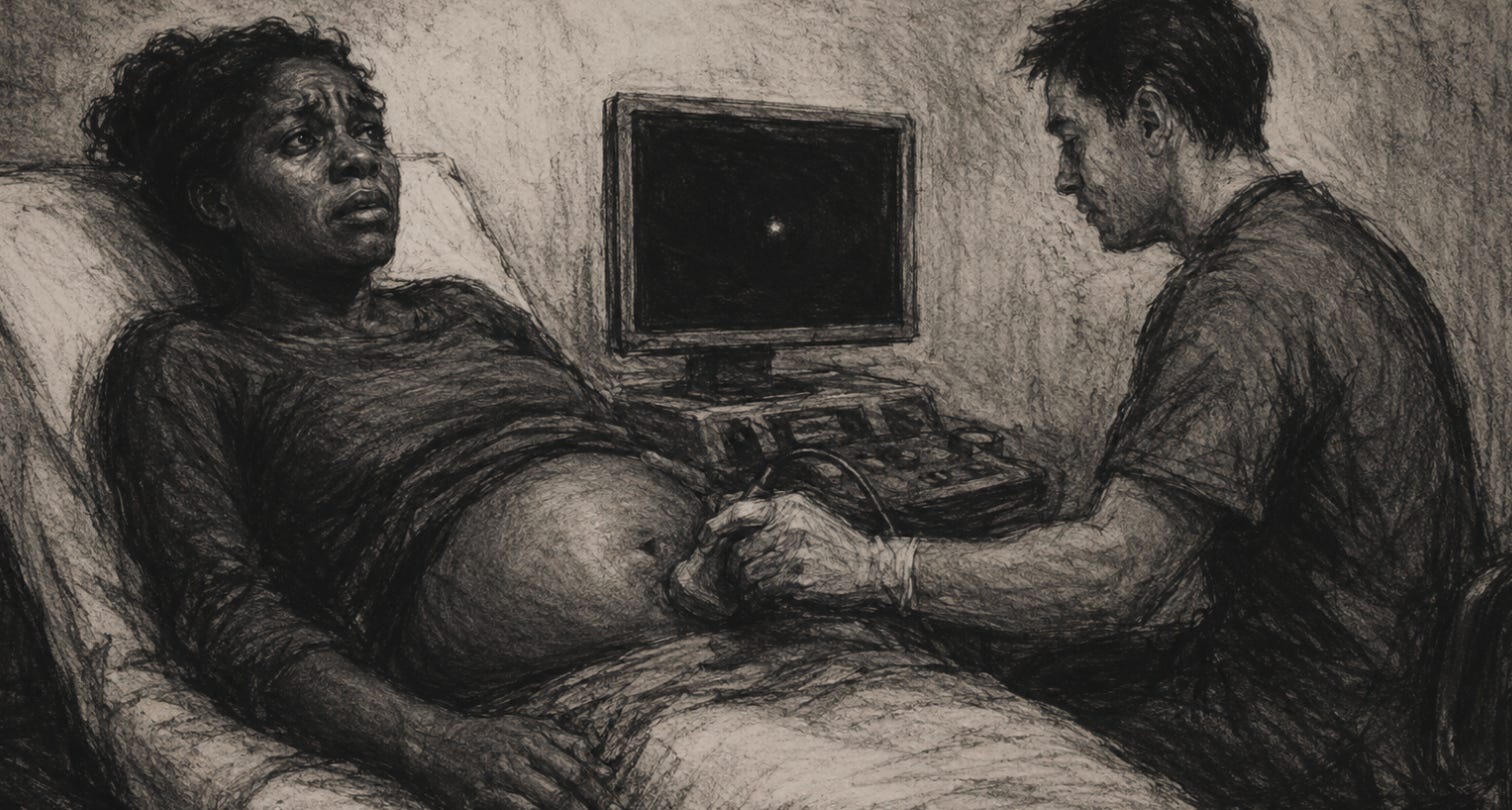
That scenario is not unusual. It is the standard. And it is where the AI empathy debate is most practically consequential, because the gap that appointment leaves is now being filled by chatbots that answer questions at midnight, validate feelings in real time, and provide more emotional acknowledgment than most women receive in the clinical encounter itself.
The research finding that patients rate AI responses as more empathic than physician responses is not surprising in this context. [1] What it reveals is a compassion deficit so large that a language model can step into it and be experienced as better care. That is not a compliment to the technology. It is an indictment of what miscarriage care has become.
Empathy Is Not Enough
Empathy is the perception of another person’s emotional state and some resonance with it. A clinician who acknowledges that a miscarriage is painful is demonstrating empathy. So is a well-trained chatbot.
Compassion goes further: it is the commitment to act on what you perceive, to be present to the specific person in front of you, and to stay in that presence through the parts that are hard.
Miscarriage affects approximately 10 to 20 percent of known pregnancies, with higher rates in women over 35.
The majority have no identifiable cause. That last fact is one of the hardest things in medicine to communicate compassionately. Compassion means sitting with a woman in the fact that there is no explanation, no culpability, and no clear path to preventing it next time, and not retreating into the biology in order to manage your own discomfort.
What patients report needing after miscarriage is not primarily information. Studies on miscarriage experience consistently find that women want to feel that their loss was acknowledged as a loss, that the clinical team understood what this pregnancy meant to them, and that they were not processed through a protocol. Those are not communication preferences. They are descriptions of what compassionate care looks like.
Free readers see above. Paid subscribers continue below. —
